Soundproof curtains are appealing because they promise a simple fix for one of apartment living’s most frustrating problems: you do not own the wall, window, floor, or ceiling, but you still need the room to feel quiet enough to sleep, work, and recover. The honest answer is more useful than the marketing answer. Curtains can improve a small apartment, but they are not magic. They work best when the noisy path is a window, the sound is mostly mid or high frequency, and the curtain is installed like an acoustic system rather than a decorative afterthought.
This guide treats curtains as one tool in a renter-friendly sound plan. It explains when they are worth buying, when a rug or acoustic panel will do more, how to measure for fewer gaps, and what failure modes make expensive drapes disappoint. The goal is not to build a studio-grade room in a leasehold apartment. The goal is to make a studio, bedroom, or living-work zone noticeably calmer without drilling into forbidden surfaces, blocking egress, or spending money on the wrong promise.

First, name the noise path
Before you shop, stand in the apartment during the time the problem happens and identify the likely path. Traffic hiss, tire splash, playground noise, voices below the window, and sirens often arrive through glass, sash gaps, and thin window frames. Footsteps, rolling chairs, dropped objects, and subwoofer thumps usually arrive through the floor-ceiling structure. A neighbor’s television may come through a party wall, a shared ventilation path, a door gap, or a window facing a courtyard.
Curtains only cover the window zone. That sounds obvious, but it is the most common purchasing mistake. If the loudest problem is upstairs impact noise, even excellent curtains may make the room look softer while the main annoyance remains unchanged. If the room is harsh because bare walls and hard floors bounce your own voice around, curtains may help, but rugs and targeted panels may help more. If the window is the weak point, curtains are a renter-friendly first move because they add soft absorption, some mass, privacy, thermal comfort, and light control in one reversible layer.
Use a simple hand test. Stand near the window when traffic is present. If the sound becomes clearly louder at the glass than at the interior wall, the window is a candidate. Press a folded towel along the side gap or bottom rail for a minute. If the sound changes, air leaks are part of the path. Clap once in the room with the curtains open, then again with any existing curtains closed. If the ring shortens, fabric coverage is improving room reflections even if it is not blocking outside noise.
What curtains can and cannot do acoustically
Apartment noise control has two different goals: absorption and isolation. Absorption reduces reflections inside your room. Isolation blocks sound from passing through an assembly. Acoustic curtain marketing often blurs the two. A soft, thick curtain can absorb some sound that hits it from inside the room, which can make calls less echoey and make a bedroom feel less sharp. Blocking outside noise is harder because sound isolation depends on mass, airtight seals, stiffness, damping, and the weakest gap in the assembly.
A curtain hanging a few inches from a window is not the same as a sealed wall. It can add a lossy layer in front of glass, especially if it is heavy and pleated, but low-frequency energy from trucks, motorcycles, aircraft, or amplified bass will still travel through the window, frame, floor, ceiling, and structure. This is why some renters buy a premium “soundproof” curtain and hear only a modest change. The product may be doing something, but the apartment’s weak paths are still open.
Think of curtains as a comfort upgrade with a realistic acoustic bonus. They are strongest for reducing brightness, flutter, mild street chatter, and the subjective harshness of a room. They are weakest for bass, impact noise, and any sound that bypasses the window. If you need legal or building-level noise reduction, documentation and landlord action matter more than another fabric layer.

The specification checklist that predicts results
The best apartment curtains for noise reduction share a few traits. First is weight. More mass generally helps more than a thin decorative panel. Look for substantial fabric, dense weave, multiple layers, or a separate lining. A blackout label alone is not enough; blackout performance is about light, and a thin coated panel can darken a room without adding much acoustic benefit.
Second is coverage. The curtain should be wider and taller than the glass. For noise, gaps are enemies. A panel that exactly matches the window opening leaves sound paths at the sides, top, and bottom. In a small apartment, a wall-to-wall or near wall-to-wall curtain can be more effective than two narrow panels because it covers frame leaks and adds more soft surface area. Floor-to-ceiling length also improves visual height, which is useful in a studio, but keep fabric safely clear of heaters, radiators, and floor vents.
Third is fullness. A flat sheet of fabric has less effective surface area than pleated fabric. Aim for generous width so the curtain still has folds when closed. Those folds add depth and increase the amount of fabric the sound encounters. Fourth is mounting distance. A small air gap between curtain and window can help, but only if the top and sides are not wide open. Fifth is return coverage. A wraparound rod, ceiling track with side returns, or overlapping panels can reduce side leakage better than a basic straight rod that stops at the trim.
Finally, check fire, care, and weight limits. Heavy curtains stress rods, brackets, and removable mounting systems. If your lease allows drilling into trim or wall studs, install properly. If it does not, tension systems and no-drill brackets may be safer, but they have real load limits. Never hang a heavy drape above a bed or desk from hardware that is not rated for the weight.
Measuring for a small apartment without wasting fabric
Start with the full problem area, not the glass alone. Measure the window, trim, and any side gaps where air leaks or street sound seem strongest. Then measure the available wall width. In a studio, you may decide to cover the whole window wall because it improves acoustics, hides visual clutter, and creates a calmer backdrop. In a narrow bedroom, you may need a more compact solution because excessive stack-back can block a closet, radiator, or balcony door.
For width, choose enough fabric for folds when closed. A common decorating mistake is buying panels that look full only when open. For acoustic comfort, fullness matters when closed. If the total rod width is 80 inches, two 50-inch panels will close, but they may be nearly flat. Wider panels or an additional pair create more folds and better coverage. For height, mount high when allowed, but leave safe clearance from baseboard heaters and avoid dragging fabric that collects dust.
Check stack-back, which is the space curtains occupy when open. Dense acoustic curtains can be bulky. If all the fabric stacks over the glass, the room loses daylight and may feel smaller. Extending the rod beyond the window lets panels park on the wall during the day and cover the trim at night. For renters, this may determine whether the upgrade feels luxurious or irritating.

Renter-friendly installation options ranked by risk
The lowest-risk option is using hardware that already exists. If your apartment has a sturdy rod or track, upgrade the panels first and keep the original hardware for move-out. The next safest option is a properly rated tension rod inside a deep recess, but only for moderate fabric weight. Many acoustic curtains are too heavy for ordinary spring tension rods, especially across wide spans.
No-drill brackets that clamp to window trim can work when the trim profile is compatible and the product is rated for the total load. They are less useful on minimal modern trim, metal frames, or uneven old molding. Freestanding room-divider frames are another option when the window wall cannot be touched. They use floor space, but they are movable and can place dense fabric behind a desk or bed.
Adhesive hooks are usually the riskiest choice for heavy curtains. They can fail suddenly, remove paint, or encourage you to use a lighter fabric that does not solve the problem. If you use removable products, follow the surface preparation, cure time, humidity, and weight instructions exactly. Do not multiply hooks and assume the combined rating is safe; real walls, paint layers, and dynamic loads are less predictable.
If your lease allows holes, proper brackets into studs or appropriate anchors are often safer than overloaded no-drill hacks. Take photos, save hardware, and patch neatly at move-out if allowed. The renter-friendly choice is not always zero holes; it is the choice with the lowest total risk under your lease.
Where curtains beat blinds, panels, and rugs
Curtains beat blinds when the problem combines noise, glare, privacy, and visual coldness. Blinds control light and privacy, but their hard slats do little for room echo. Cellular shades can improve thermal comfort and may reduce drafts, but they do not add the same fabric surface area as full drapes. If you already have blinds, leaving them in place and adding curtains can create a layered system: blinds for daylight control, curtains for night privacy and acoustic softness.
Curtains beat wall panels when the window is the weak path or when you need a soft video-call background. A curtain behind or beside a desk can reduce window reflections, soften the microphone environment, and hide a visually busy corner. Wall panels are better when your voice is bouncing between bare side walls or when the desk faces a hard wall. Rugs beat curtains for footfall, chair movement, and floor-ceiling reflections. In a small apartment, the best sequence is usually window curtains, rug plus pad, and then a few targeted panels if calls still sound sharp.

Budget tiers and expected payoff
At the low budget tier, improve what you own. Close existing curtains fully, add side overlap with simple tiebacks or clips, use draft-safe window weatherstripping if permitted, and place a rug or upholstered chair near the window wall. Even moving a bookcase or fabric screen near a reflective corner can reduce harshness. This tier is about diagnosing whether soft coverage helps before buying heavy drapes.
At the mid tier, buy dense blackout or lined curtains with enough width for fullness, plus a sturdier rod or renter-safe bracket. This is the sweet spot for many apartments. You may not achieve dramatic decibel reduction, but you can often reduce the perceived edge of street noise, improve sleep darkness, and make the room feel more finished. Choose washable or vacuum-friendly fabric if the window collects city dust.
At the higher tier, consider purpose-built acoustic curtains with published test information, wraparound tracks, and wall-to-wall coverage. This tier makes sense for bedrooms facing busy streets, home offices where speech clarity matters daily, or apartments where you plan to stay long enough to enjoy the investment. It does not make sense if the dominant problem is upstairs impact noise or a neighbor’s bass through the structure.
Failure modes that make curtains disappoint
The first failure mode is buying too little fabric. Thin, flat panels that barely cover the glass may darken the room but leave the acoustic path largely unchanged. The second is leaving gaps. A one-inch opening at the side, top, or bottom can undermine the sense of isolation because airborne sound follows leaks. The third is ignoring the rest of the room. A curtain cannot make a hard, empty studio sound calm if the floor, desk wall, and ceiling remain reflective.
The fourth failure mode is confusing lower annoyance with measurable silence. A room can feel better because the sound is less bright, even if a phone app shows only a small change. Phone sound meters are useful for before-and-after notes, not laboratory proof. Take readings from the same location, at the same time of day, with the same window and HVAC conditions. Write down what changed subjectively: sleep interruptions, call echo, television volume, or how sharp traffic feels.
The fifth failure mode is unsafe installation. Heavy fabric falling from a window can damage walls, furniture, or people. In rentals, a solution that fails mechanically is not renter-friendly even if it avoids screws.
A practical installation plan
Start with one room and one outcome. For sleep, prioritize the bedroom window and combine curtains with a rug pad, upholstered headboard, and consistent nighttime closure. For work, prioritize the desk backdrop and side reflections. For a living room, prioritize the largest glass area and seating zone. Buy enough fabric for closed fullness, install the strongest lease-compliant hardware, and photograph the installation for your records.
After installation, test for a week before adding more. Close the curtains during the actual noise window, not only at night. Note whether speech, traffic, sleep, or call quality improves. If the room is still harsh, add a rug and pad before adding more curtains. If outside noise still dominates, inspect weatherstripping, door gaps, and alternate paths. If the problem is structural or excessive, document dates and times and communicate with building management rather than trying to solve a building assembly with fabric alone.
The bottom line for renters
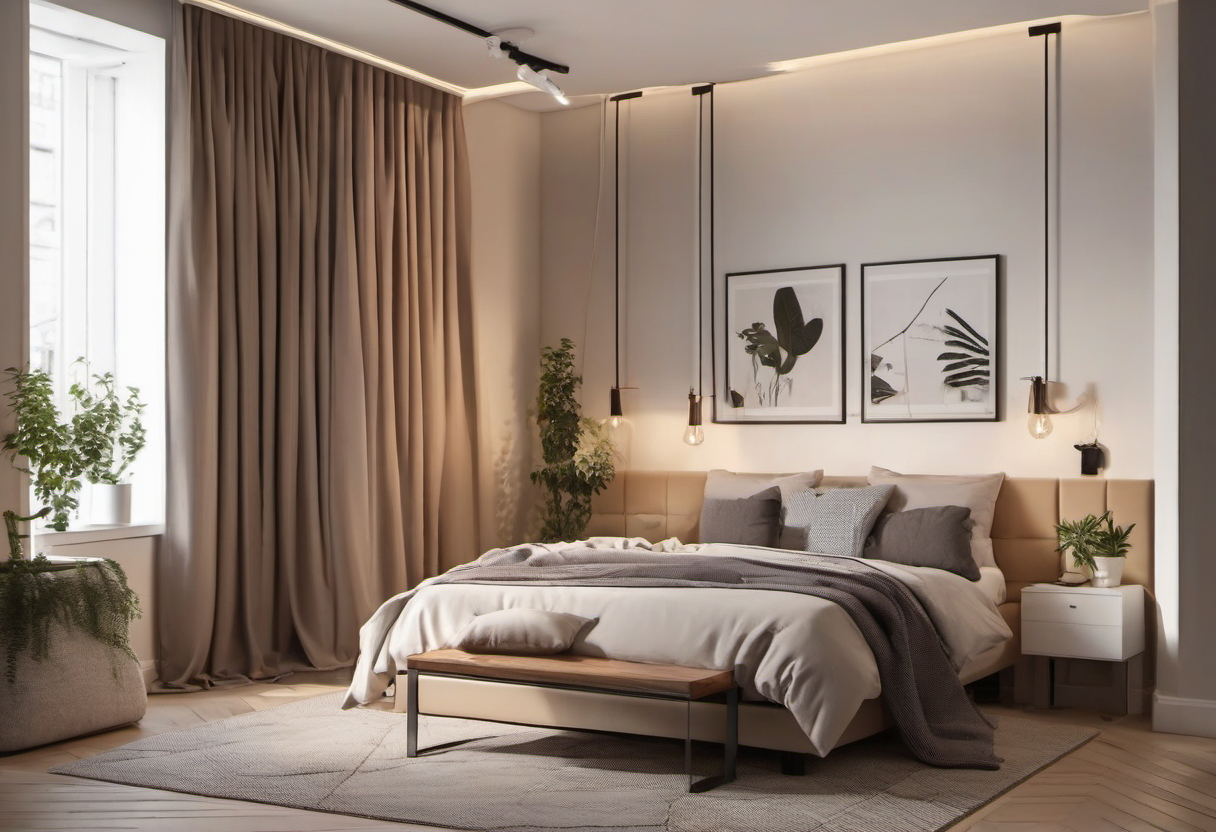
Soundproof curtains are worth considering when your small apartment has a noisy or reflective window wall, you need a reversible upgrade, and you value privacy, darkness, and design warmth alongside acoustic comfort. They are not worth overpaying for when the main problem is bass, footsteps, or noise traveling through walls and ceilings. The strongest results come from treating the curtain as a system: dense fabric, generous fullness, high and wide coverage, fewer gaps, safe hardware, and integration with rugs and other soft furnishings.
For most renters, the right expectation is not silence. It is a room that sounds less sharp, sleeps darker, looks calmer, and supports daily routines with fewer annoyances. That is still a meaningful win in a small apartment, especially when the upgrade can move with you.