A small apartment can look finished and still sound unfinished. Hard floors, bare drywall, large windows, metal shelving, and compact open layouts bounce speech around until video calls feel sharp, music sounds thin, and every plate placed on the counter seems louder than it should. Acoustic panels can help, but only when they are chosen for the right problem. The best renter-friendly sound-control plan starts by separating two goals: reducing echo inside your own room and blocking noise that comes from somewhere else.
This guide focuses on the first goal because it is the one renters can improve most reliably without construction. Acoustic panels, rugs, curtains, upholstered furniture, bookcases, and careful placement can make a studio, bedroom office, or small living room calmer and easier to use. They will not turn a thin party wall into a recording studio wall, and they will not replace a properly sealed door. Used honestly, though, they can make daily life feel less harsh: clearer calls, less clatter, better sleep routines, and a room that feels warmer without adding visual clutter.

Start with the sound problem you actually have
Before buying panels, stand in the room and name the problem in plain language. Is your voice echoing on calls? Does the room feel tiring when two people talk at once? Does music sound bright and splashy? Do you hear footsteps from upstairs, traffic through the window, or a neighbor’s television through the wall? These are different issues.
Acoustic panels primarily absorb sound energy that is already inside the room. That makes them useful for echo, reverberation, flutter between parallel walls, and speech clarity. They are much less effective for external noise because blocking sound requires mass, airtightness, and structural isolation. A lightweight foam or fabric panel on a wall may make your side of the room less reflective, but it will not stop bass from a subwoofer next door. If outside noise is the main issue, focus first on door sweeps, window seals, heavy curtains, white noise, and lease-safe conversations with building management.
For internal echo, do a quick clap test. Stand where you work, sit, or sleep, clap once, and listen for a sharp ring or repeated flutter. Then speak at normal volume and notice whether consonants feel crisp or smeared. Repeat after adding a blanket over a chair, opening curtains, or placing a rug temporarily. If the sound improves with soft temporary objects, permanent-looking acoustic treatment is likely to help.
NRC and STC basics, without the jargon spiral
Two ratings appear often in acoustic product listings: NRC and STC. NRC, or Noise Reduction Coefficient, describes how much sound a material absorbs on average across a range of speech-relevant frequencies. A higher NRC generally means more absorption. A thick mineral wool or fiberglass fabric-wrapped panel often performs far better than a thin decorative felt tile, especially at lower midrange frequencies that affect voices.
STC, or Sound Transmission Class, describes how well an assembly blocks sound from passing through it. The key word is assembly: a wall, door, window, floor-ceiling system, or partition built from multiple materials. A single renter-friendly wall panel usually should not be evaluated like a wall assembly. If a product claims to “soundproof” an apartment with thin peel-and-stick foam, read the details carefully. It may absorb echo, but soundproofing is a much bigger claim.
For shopping, prioritize transparent absorption data over vague promises. Look for panel thickness, core material, size, mounting method, fire or safety information, weight, and whether test data is published. A 2-inch fabric-wrapped panel with an absorptive core is typically more useful than a very thin tile when the goal is noticeable room improvement. Decorative slat panels can look beautiful, but many are designed for a mix of diffusion, absorption, and aesthetics; check the backing and thickness before assuming they solve the same problem as purpose-built acoustic panels.

The renter-friendly installation hierarchy
The safest installation is the one you can remove cleanly at move-out. Start with options that avoid wall damage entirely. Freestanding acoustic screens behind a desk, folding room dividers with absorptive fabric, thick curtains on existing rods, large rugs with pads, upholstered headboards, and tall bookcases with uneven contents can all reduce reflections without adhesive on painted walls. These also move with you, which matters if you rent short term.
If wall panels are necessary, use removable picture-hanging strips within their rated weight and surface instructions. Clean the wall, respect cure time, and never overload a strip because a falling panel can damage the paint anyway. Avoid construction adhesive, spray adhesive, double-sided foam tape of unknown strength, or nails unless your lease clearly allows them. For heavier panels, consider mounting them to a thin freestanding frame, a bookcase back, a tension-pole system, or a headboard panel instead of the wall.
Ceilings are usually the riskiest surface for renters. Overhead panels can be effective in studios with hard floors, but falling objects are a safety issue, and many leases prohibit ceiling modifications. If you need overhead absorption for calls or music practice, try a thick rug, soft seating, curtains, and a freestanding panel first. If those are not enough, use professional advice and landlord approval rather than improvising with adhesive above your head.
Placement matters more than buying a large quantity
Panels work best where reflections are strongest. In a small apartment, start with the first-reflection points around the activity zone. For a desk, sit in your normal chair and imagine sound leaving your mouth, hitting the nearby side walls, and bouncing back to the microphone. A panel beside or slightly in front of the desk often improves calls more than a panel across the room. A panel behind the monitor can reduce reflections from the wall you face, while a panel behind your chair can help if your back wall is close.
In a bedroom, the wall behind the headboard and one side wall often matter. If the bed sits in a corner, sound can build up around the two hard walls. An upholstered headboard, fabric wall hanging with safe mounting, or two vertical panels above the nightstands can make the sleep zone softer. In a living room, treat the wall behind the sofa, the wall opposite speakers, or the dining corner where conversation gets loud.
Do not cover every wall. Over-absorbed rooms can feel dull and visually heavy, and renters rarely need that level of treatment. A better target is balanced comfort: enough absorption to remove harsh reflections while keeping the apartment lively. Use symmetry if the room is used for music or video, but for normal living, treat the noisiest daily positions first.

Product selection criteria that actually matter
A good acoustic panel for a small apartment should satisfy five checks. First, it should be thick enough for the problem. Thin felt can reduce high-frequency brightness, but speech clarity often benefits from thicker absorptive material. Second, it should have a safe, documented surface and core. Look for product safety information, fire-related documentation where relevant, and manufacturer transparency. Third, it should mount in a way your lease can tolerate. Fourth, it should fit the room visually, because panels that look temporary often get removed. Fifth, it should be easy to clean or dust.
Avoid buying only by square-foot price. A very cheap pack may include many thin tiles that require a lot of wall coverage to produce a modest change. A smaller number of better panels at reflection points can outperform a full grid of decorative foam. Also consider weight. Heavy panels may perform well but be unsuitable for removable strips. Lightweight panels may mount easily but deliver less absorption. The right choice balances performance, safety, lease risk, and appearance.
Color matters in small rooms. Panels close to the wall color disappear; contrasting panels become art. If the room already has many small objects, choose simple rectangles or large fabric pieces. If the apartment is minimal, a vertical pair of panels can add rhythm. Treat acoustic panels as part of the interior design plan, not as emergency equipment taped to the wall.
Budget tiers: what to do at each price point
At the zero-to-low budget tier, rearrange existing soft goods. Put a rug where voices reflect between floor and ceiling, move a fabric chair into the conversation zone, hang heavier curtains if you already own them, and place books or textured objects on empty shelves. Add felt pads to chair legs and cabinet bumpers to reduce impact noise. These changes are not glamorous, but they often remove the most annoying sharp sounds.
At the modest tier, buy a rug pad, heavier curtains, one upholstered headboard or fabric wall piece, and two to four real acoustic panels for the desk or bed zone. This tier usually gives the best renter value because it combines interior softness with targeted absorption. If you work from home, prioritize the wall beside and behind your workstation. If sleep is the issue, prioritize the bed wall and window softness.
At the higher tier, invest in larger fabric-wrapped panels, freestanding absorptive dividers, custom colors, and better window treatments. This is appropriate when the apartment is also a content studio, therapy room, music practice space, or full-time office. Even then, keep the plan removable. High-quality panels can move to a future home if you avoid permanent adhesives.
Soft furnishings are part of the acoustic system
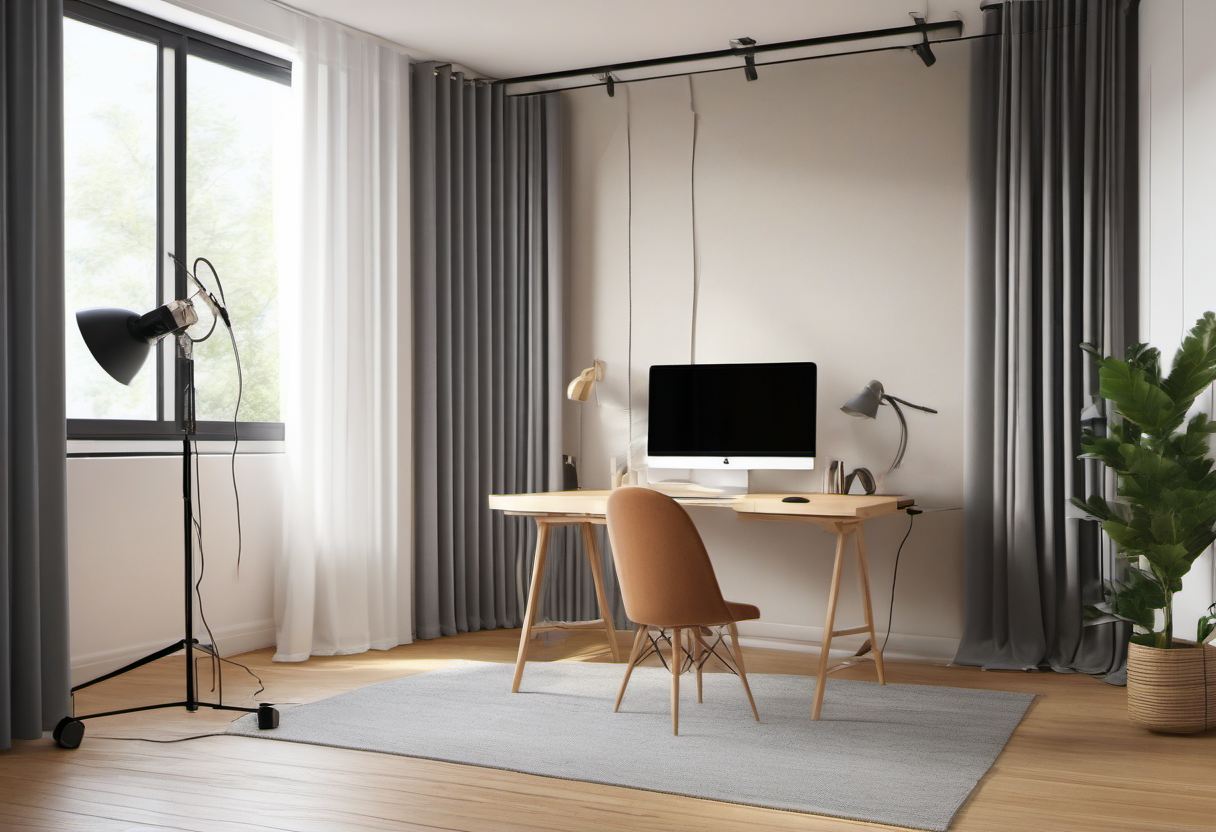
Acoustic panels are only one tool. In small apartments, the furnishings often do half the work. A rug with a dense pad reduces floor reflections and softens footfall inside your unit. Curtains reduce glass reflections and can visually warm a window wall. Upholstered seating absorbs more than bare wood or metal. A fabric room divider can create both visual zoning and acoustic softness. Even bedding changes the room: a made bed with pillows and a textile headboard absorbs more than a bare mattress against drywall.
The trick is to layer these items where they support daily life. A rug under the sofa zone can connect to the advice in a small-space rug plan, while a room divider can create a call-friendly corner without building a wall. If you already use renter-friendly layered lighting, align panels with lamps and art so the treatment looks intentional. A pair of panels behind a reading chair, a floor lamp beside them, and a small side table will look like a designed nook rather than a technical fix.

A practical one-week acoustic checklist
Day one: identify the main activity zone. Pick one desk, bed, sofa, or dining area. Do not treat the entire apartment first. Day two: perform the clap and speech test, then repeat with temporary blankets, pillows, and curtains adjusted. Day three: add or reposition soft furnishings you already own. Day four: mark likely panel locations with painter’s tape and live with the visual layout. Day five: choose panels based on thickness, weight, mounting method, safety documentation, and return policy. Day six: install the minimum number of panels and test calls or conversations. Day seven: decide whether the next improvement should be another panel, a rug pad, curtains, or sealing a gap.
This slow sequence prevents the common mistake of buying too many panels too early. The goal is not to decorate every blank wall. The goal is to remove the repeated sound problem with the fewest risky changes.
Common tradeoffs and mistakes
The first tradeoff is appearance versus performance. The most absorptive product is not always the one you want to see every day, but the prettiest thin tile may not solve the problem. The second tradeoff is removability versus weight. Better cores can be heavier, which may require freestanding solutions instead of adhesive strips. The third tradeoff is absorption versus cleanliness. Highly textured surfaces can collect dust, so allergy-sensitive households may prefer smooth fabric panels that can be vacuumed gently.
Common mistakes include placing panels too high, treating a wall nobody faces, ignoring the floor, and expecting wall panels to block neighbor noise. Another mistake is using random foam near heat sources, outlets, candles, or cooking areas without checking safety. Small apartments compress functions, so acoustic products may end up near lamps, kitchens, and heaters. Keep clearances sensible and follow manufacturer instructions.
When panels are not the answer
If the problem is traffic, hallway noise, or a loud neighbor, start with gaps and barriers. A door sweep, weatherstripping where allowed, lined curtains, a heavier rug, and a white-noise machine may help more than wall panels. If the problem is low-frequency bass, renter-friendly fixes are limited. Absorption inside your room can reduce some resonance, but bass transmission through structure is hard to stop without construction. Document patterns, check building quiet-hour rules, and use management channels when appropriate.
If the problem is your own noise bothering others, reduce impact and vibration first. Put speakers on isolation pads, move subwoofers away from shared walls, add rugs under rolling chairs, and avoid wall-mounted speakers on party walls. Panels can reduce reflected energy in your room, but they do not excuse excessive volume.
Final decision rule
Buy acoustic panels when the room itself sounds harsh and temporary soft materials clearly improve it. Choose renter-safe mounting, use real absorption data when available, and place panels at daily reflection points instead of filling blank walls. Combine panels with rugs, curtains, upholstered pieces, and thoughtful zoning. The result should be a room that sounds calmer, looks intentional, and can be returned to its original condition when the lease ends.
For many small apartments, the winning plan is simple: two panels near the desk, two near the bed or sofa, a rug with a pad, window softness, and fewer hard empty surfaces. That combination will not soundproof the unit, but it can make the space easier to work, rest, and share every day.