A rug is not a magic soundproofing layer, but in a small apartment it is one of the few acoustic upgrades that improves comfort, protects the lease, and looks like a normal design decision. The trick is to stop treating rugs as decoration only. A rug changes how sound behaves at the floor: it softens footfall, reduces scrape and clatter, absorbs some high-frequency reflections, and makes an open studio feel less sharp during calls or conversations. A rug pad changes the equation again because it adds cushioning, grip, and in the best cases a resilient layer between the rug and the hard floor.
This guide focuses on renter-friendly noise reduction, not construction-grade sound isolation. If you hear bass through a party wall, footsteps from the unit above, or traffic through a leaky window, a rug will not solve the whole problem. But if your own apartment sounds bright, chairs scrape loudly, a rolling desk chair rattles across hard flooring, or downstairs neighbors hear every step, the right rug-and-pad plan is one of the highest-value places to start.
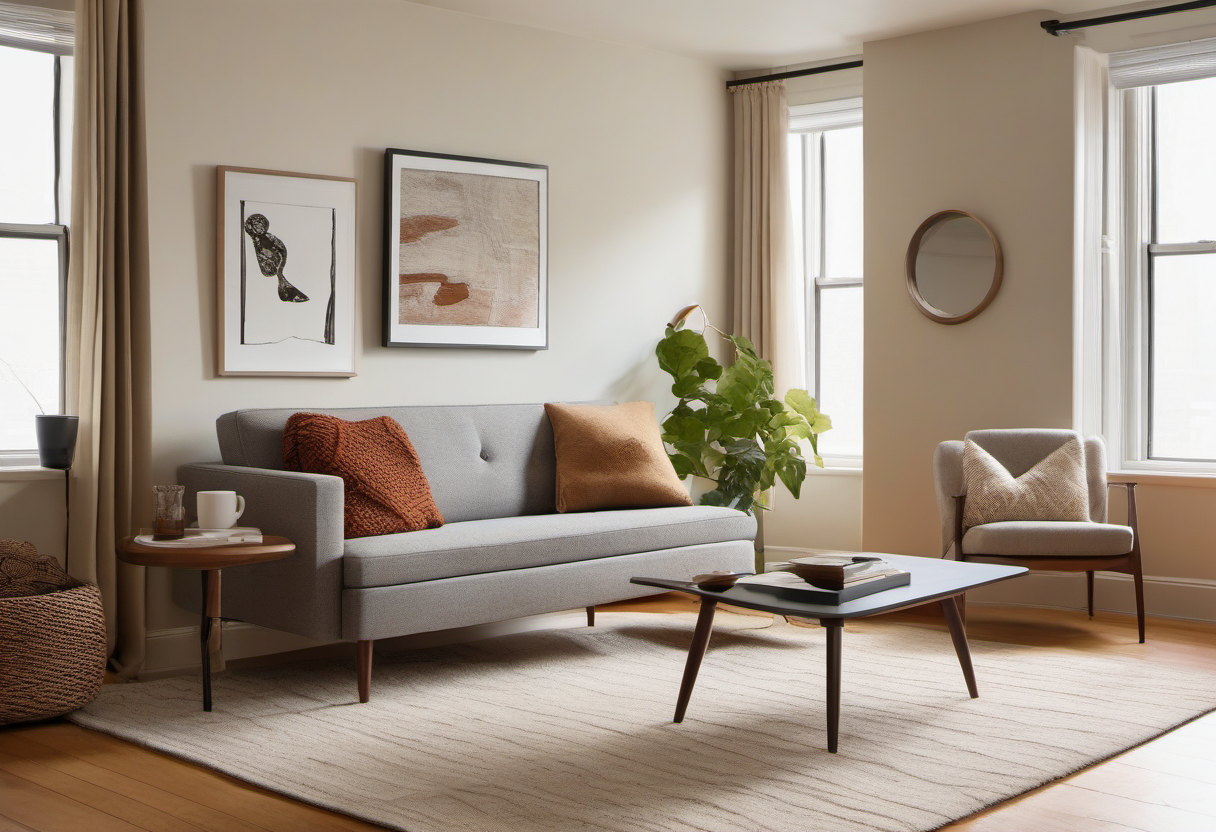
Start by naming the noise: echo, impact, or transmission
Rug advice gets confusing because people use the word noise for several different problems. Echo is the sound bouncing around inside your own room. A hard floor, bare windows, painted drywall, and a low amount of upholstered furniture can make speech feel harsh and music feel splashy. Impact noise is created when something hits or moves across the floor: steps, pet nails, dining chairs, dropped utensils, a child jumping, or an office chair rolling. Transmission is sound traveling through the building assembly to another unit or from another unit into yours.
Rugs help most with the first two. They reduce floor reflections and cushion some impact before it enters the floor. They are weaker against transmission that has already passed through a wall, ceiling, or structural slab. This distinction matters because it sets expectations. A rug can make your living zone sound warmer and reduce the sharpness of daily movement, but it cannot turn a lightweight apartment floor into a decoupled studio floor.
Use a quick three-minute audit. Clap once in the living area, then speak normally and listen for a metallic ring. Drag a dining chair a few inches and notice whether the sound is a scrape, a thud, or both. Walk with shoes, socks, and bare feet. Sit at your desk and roll the chair once. If the annoying sounds start at the floor, a rug plan is likely worth doing before you buy wall treatments.
Why the pad matters more than most shoppers think
A rug alone changes the surface. A rug pad changes the system. The pad can add thickness, prevent the rug from sliding, reduce wrinkles that become trip hazards, protect the flooring finish, and cushion impacts. For noise reduction, the most useful pads are usually dense felt or felt-and-rubber combinations. Felt contributes mass and softness; rubber or natural rubber backing can improve grip and add a little resilience. Very thin open-weave mesh pads are helpful when the only problem is sliding, but they usually do far less for sound.
Think of the pad as a lease-safe shock absorber. When a footstep or chair leg hits the rug, the pad spreads and damps some of that energy before it reaches the hard floor. The effect is not the same as a laboratory-rated floating floor assembly, and product listings can overstate the benefit. Still, in real apartments, a dense pad under a properly sized rug often produces a more noticeable change than buying a prettier but thin rug with no underlay.
Do not buy the thickest pad blindly. A pad that is too soft can make furniture wobble, create door-clearance problems, or make a dining chair hard to slide. A pad that is too tall at an entry can become a trip edge. For living rooms and bedrooms, thicker felt can be comfortable. For dining areas and desks, firmer low-profile felt-and-rubber is usually easier to live with.
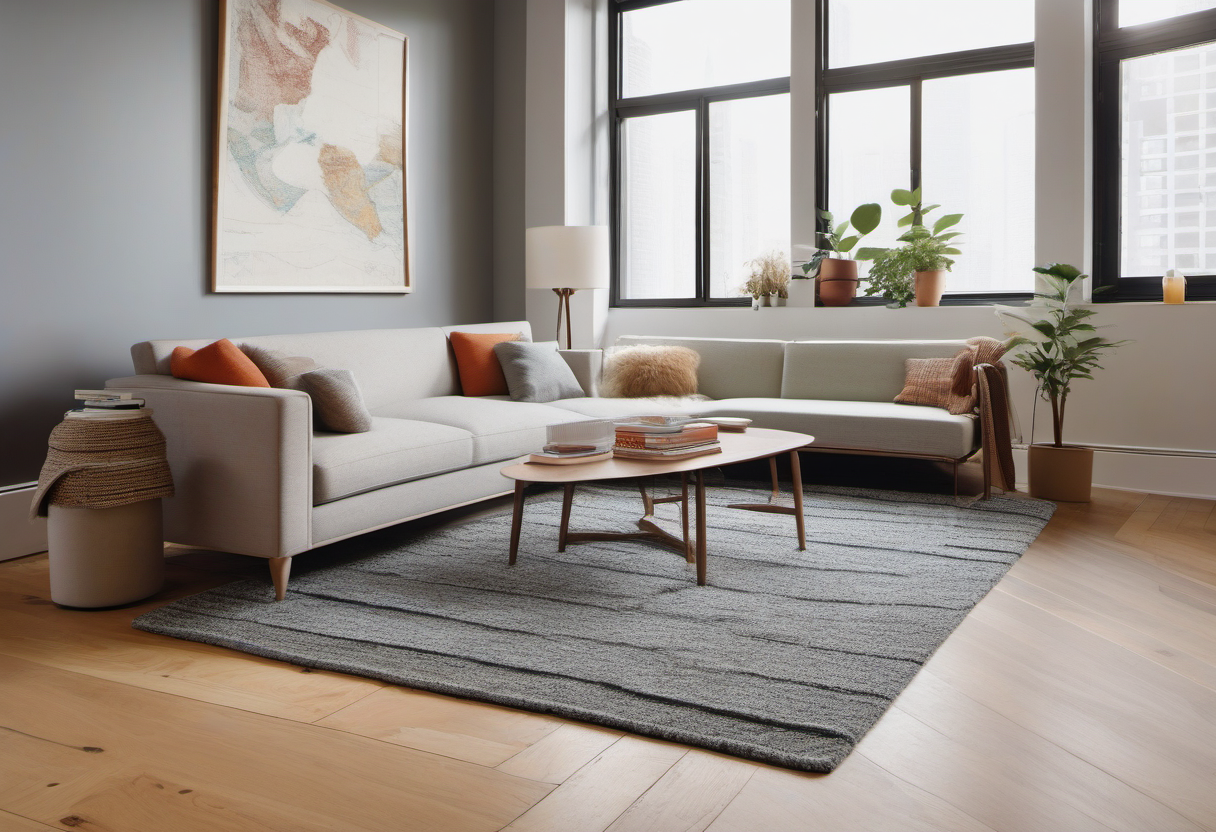
Choose the right rug construction for the room
Rug construction affects both sound and maintenance. Plush wool, dense synthetic pile, and thicker tufted rugs tend to absorb more high-frequency room reflections than a very flat, thin weave. They also soften footsteps. The tradeoff is cleaning, furniture stability, and door clearance. A high-pile rug may be excellent beside a bed but frustrating under a dining table or rolling chair.
Flatweaves are not useless. A wool flatweave over a dense pad can be a smart renter choice because it is easier to clean and less bulky while still adding textile coverage. It will not feel as cushioned as a plush rug, but it can reduce brightness and protect the floor from chair movement. Washable rugs can work in entries, kitchens, and pet zones if the pad is nonslip and compatible with the floor. The acoustic improvement usually comes more from full coverage and the pad than from the thin washable top layer.
For small apartments, prioritize the rooms by daily noise. A bedroom rug should be comfortable and large enough that morning footsteps land on textile rather than hard floor. A living room rug should connect the sofa, chair, and coffee table so conversation happens over a softer surface. A dining rug should be low enough that chairs remain stable, with felt glides on chair legs to prevent scraping. A desk rug should resist chair movement and avoid bunching.
Sizing rules that help sound, not just style
A rug that is too small can look cute and still fail acoustically. Sound control improves when the rug covers the actual impact and reflection zone. In a living room, at least the front legs of the sofa and chairs should sit on the rug, and the rug should extend through the walking path where people cross the seating area. In a bedroom, the rug should extend beyond the sides and foot of the bed so the first steps of the day land on a cushioned surface. In a studio, the rug should define the activity zone: sofa zone, bed zone, desk zone, or dining zone.
This is where small-space design and acoustic design overlap. The best rug is often not the largest possible rug; it is the rug that covers the noisy behavior. If your loudest problem is a rolling chair, a huge living room rug across the room will not help much. If the problem is chair scrape at the dining table, a bedroom runner is irrelevant. Map the rug to the action.
For more detailed proportions, use the existing small-space rug sizing method as the visual starting point, then add the acoustic requirement: cover where feet, chair legs, pet paths, and dropped objects actually hit. Leave enough exposed floor around doors, heat sources, and wet zones so the apartment still functions safely.
Desk and video-call zones need a firmer plan
A home-office corner creates a specific sound problem: wheels, chair legs, foot tapping, keyboard clatter, and voice reflections all happen in one small area. A plush rug can reduce sound, but office chairs can sink into it, wrinkle it, or make movement harder. A thin rug can roll well but may do little for noise. The renter-friendly compromise is a low-pile rug with a firm dense pad, placed large enough that the chair remains on the rug through its full range of movement.
If the chair has hard casters, consider softer floor-safe casters, a stable low-profile mat that does not crack, or a non-rolling task chair if the desk is compact. Add felt pads to stationary furniture legs. Place the desk so your voice is not firing directly into a bare wall, and combine the rug with curtains or renter-friendly acoustic panels if calls still sound sharp.
Avoid creating a trip ridge behind the chair. The rug should extend beyond the chair’s backward roll zone, or it should stop well away from it. A half-on, half-off chair path is noisy and annoying. In a studio apartment, a desk rug can also mark the work zone visually, making the room feel less like one undefined box.

Bedroom rugs: the quietest upgrade most renters underuse
Bedroom noise is not only about sleep. It is about the small sounds that make a compact apartment feel restless: bare feet on hard floor at night, a phone dropped beside the bed, a laundry basket sliding, a pet jumping down, or a closet door echoing against an empty surface. A rug under the bed can damp these everyday sounds without any wall attachment.
For the best effect, place the rug so it extends beyond both sides of the bed and at the foot. If a full under-bed rug is not practical, use two runners along the sides plus a smaller rug at the foot. Add a dense pad under each piece, trimmed slightly smaller than the rug so edges lie flat. In a rental, this approach is safer than adhesive sound products and easier to take to the next home.
The bedroom is also where floor-finish compatibility matters. Some pads can discolor certain hardwood, vinyl, laminate, or heated floors. Avoid mystery rubber, sticky backings, and pads that smell strongly of plasticizer. Check manufacturer guidance, the lease, and the floor warranty when available. Lift the rug periodically to vacuum grit and confirm that the surface is dry and unchanged.
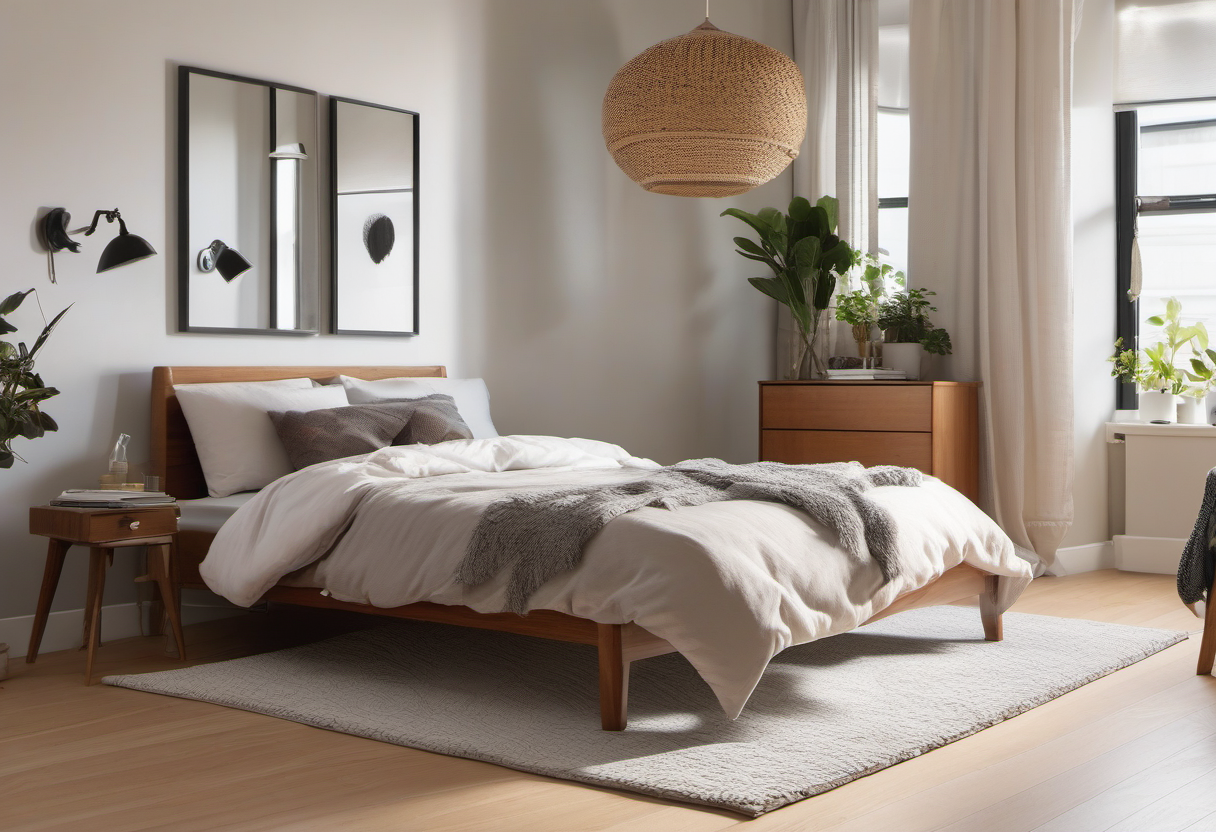
Entry, hallway, and dining noise: small details count
The loudest apartment sounds are often not dramatic. They are repetitive: keys dropped near the door, shoes on a hallway path, dining chairs scraping, stools tapping, pet bowls sliding, and cabinet doors closing. Rugs and pads can handle many of these if they are placed at the source.
At the entry, use a low-profile runner or mat with a nonslip pad that tolerates moisture and can be cleaned. Do not use a thick pad where a door must swing across it. In a hallway, a runner can reduce footfall and make a narrow apartment feel more finished, but it must be secured so it does not creep. In a dining nook, choose a low-pile rug large enough that chairs remain on it when pulled back. Add felt glides to chair legs; they often reduce scrape more effectively than the rug alone.
For kitchens, be conservative. A washable runner can reduce dropped-object clatter and make standing more comfortable, but moisture, grease, and trip risk are real. Keep rugs away from open flames, check that edges stay flat, and wash or replace pads that trap spills. Acoustic comfort should never outrank basic safety.
What ratings can and cannot tell you
Acoustic products often mention NRC, STC, or IIC. NRC describes how much sound a material absorbs in a room. STC describes airborne sound transmission loss through an assembly, such as a wall or floor-ceiling system. IIC describes impact sound insulation of a floor-ceiling assembly measured under standardized conditions. For renters, the key word is assembly. A rug listing may borrow impressive language from building acoustics, but your actual apartment floor includes the slab or joists, subfloor, finish floor, ceiling below, penetrations, and installation details you cannot change.
A rug and pad can improve the surface layer, especially for impact and room reflections. It should not be evaluated like a complete laboratory floor system unless the manufacturer provides credible test data for a comparable assembly. Be skeptical of claims that a thin decorative rug will soundproof an apartment. Look for concrete details instead: pile height, material, pad density, backing, floor compatibility, edge behavior, cleanability, return policy, and any real test documentation.
This is also why the best renter plan is layered. Use a rug and pad for floor noise, curtains for glass reflections, upholstered furniture for absorption, and panels or soft wall decor only where reflections remain obvious. Each layer solves a piece of the problem without pretending to replace construction.
A renter-safe shopping checklist
Before buying, answer these questions. Does the rug cover the noisy activity zone? Is the pad dense enough to cushion impact rather than just stop slipping? Is the pad approved for the floor type? Will doors clear the total height? Will dining chairs, desk chairs, or walkers move safely? Can the rug be cleaned at the frequency your household needs? Are the edges likely to curl? Can you return it if the smell, thickness, or stability is wrong?
For most small apartments, the value formula is simple: choose the right size, spend enough on the pad, and keep the rug practical. A beautiful thin rug with no pad often underperforms. A medium-priced rug over a well-chosen dense pad can feel quieter, safer, and more comfortable. If budget is tight, buy fewer rugs but place them precisely: bed sides, desk chair zone, sofa conversation area, hallway path, or dining chair footprint.
If you share walls or floors with neighbors, also think about behavior. Remove shoes indoors, add felt glides, avoid dragging furniture late at night, and isolate speaker stands or subwoofers from the floor. Those habits cost little and make the rug system more effective.
The one-week rug-and-pad noise plan
Day one: identify the noisiest floor behavior. Do not buy anything yet. Day two: temporarily place blankets, towels, or an existing rug in that zone and repeat the clap, walk, chair, or call test. Day three: measure the full activity footprint, including chair pull-back and walking paths. Day four: choose the rug construction for the job: plush for bedroom comfort, flatweave or low pile for dining and desk zones, washable runner for entries. Day five: choose a floor-safe dense pad and confirm door clearance. Day six: install, trim the pad slightly smaller than the rug, flatten edges, and add felt glides where needed. Day seven: test again and decide whether the next acoustic layer should be curtains, panels, a room divider, or simply another targeted rug.
That sequence prevents the common renter mistake of buying a rug because it fills a blank space rather than because it solves a sound problem. It also keeps the design coherent. In a small apartment, every item has to earn its footprint.
Final decision rule
Use rugs and pads when the noise begins at the floor or the room feels acoustically hard. Prioritize dense padding, correct sizing, floor-safe materials, and source-based placement over decorative impulse buys. Expect less scrape, less clatter, warmer speech, and softer daily movement. Do not expect a rug to block bass, fix a leaky window, or erase structural noise from another unit.
For the renter-friendly small-apartment cluster, rugs and pads sit between visual design and acoustic treatment. They pair naturally with acoustic panels, curtains, room dividers, and studio layouts because they solve a different surface. Start at the floor, add softness where life actually happens, and keep every layer removable. The result is a quieter apartment that still looks like a home, not a temporary recording booth.