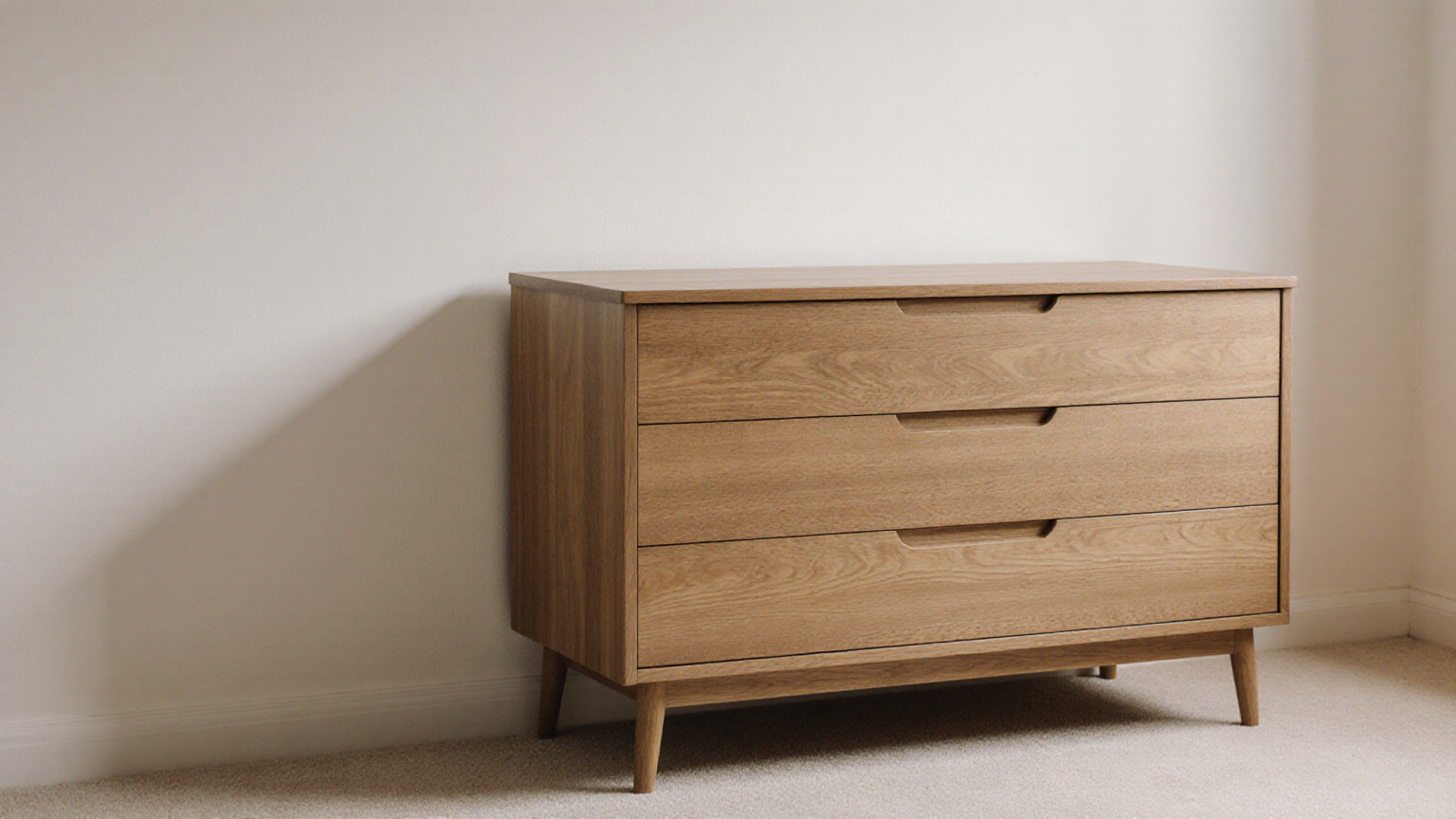
Furniture tip-over prevention is a life-safety problem, not a styling preference. A dresser can look stable when every drawer is closed and still become unstable when drawers are opened, weight is added high, a child climbs, flooring slopes, or the unit is used outside the conditions in its instructions. Renters face an extra complication: the correct anchoring method depends on the furniture, the wall, the fastener, and permission or repair rules. This guide turns that uncertainty into an inventory and decision process instead of recommending one universal kit.
Separate immediate exposure from the long-term installation decision
Begin with exposure you can reduce today. Close drawers and cabinet doors, remove climbable objects from the top, move toys and remote controls away, keep children from playing on furniture, and place heavy items low. These actions reduce temptation and leverage, but they do not replace an anchor required by the manufacturer. The U.S. Consumer Product Safety Commission maintains a dedicated tip-over information center and the Anchor It campaign (CPSC center, Anchor It).
If a unit is visibly leaning, damaged, missing hardware, recalled, or unstable during ordinary use, stop using it and keep people away. Do not “test” it by opening several drawers. Contact the manufacturer, property manager, or a qualified installer as appropriate.
Inventory every tall or drawer-based unit
Walk room by room and record the manufacturer, model if known, approximate height and depth, number of drawers or doors, wall location, floor condition, current restraint, and who uses the room. Include dressers, chests, wardrobes, bookcases, media units, and televisions. Photograph labels only for your private record; do not publish household addresses, child information, or serial numbers.
Check recalls before buying hardware. CPSC’s recall database is the primary U.S. source (CPSC recalls). A recall remedy may involve repair, replacement, refund, or a specific kit. Generic hardware is not a substitute for following the remedy.
Use an anchor, reposition, replace, or remove decision tree
| Condition | Near-term action | Durable path |
|---|---|---|
| Manufacturer requires anchoring and wall is known | Restrict access until secured | Install exactly as instructed |
| Wall substrate or utilities are uncertain | Reduce exposure and stop climbing access | Ask landlord or qualified installer to identify a safe point |
| Unit is damaged, recalled, or missing structural parts | Stop use | Follow recall or replace/remove |
| Furniture blocks an exit or window | Clear the route | Reposition while preserving required anchoring |
| No compatible restraint instructions can be found | Keep risk controls in place | Contact manufacturer; do not improvise load ratings |
The legal and product context has changed over time. The STURDY Act directed a mandatory stability framework for clothing storage units (public law), and the federal standard appears in 16 CFR Part 1261 (eCFR). Those rules do not prove that an older unit, a used item, or every category of furniture is safe. Nor do they eliminate the need to follow anchoring instructions.
Verify the wall before selecting a fastener
Drywall alone, a wood stud, masonry, metal framing, plaster, tile, and a wall containing plumbing or wiring are not interchangeable. A fastener’s package claim is not permission to use it in an unknown wall. Locate utilities and structure using methods appropriate to the building, and involve a qualified installer when uncertain. Renters should document the proposed location and ask the property manager what approval and repair process applies.
USA.gov points renters to state and local tenant resources rather than presenting one national lease rule (tenant rights). That is the correct level of caution: lease terms, habitability rules, reasonable-modification rights, and move-out repairs vary. Get permission in writing when required, but do not treat a delayed email as evidence that an unstable unit is safe to keep using normally.
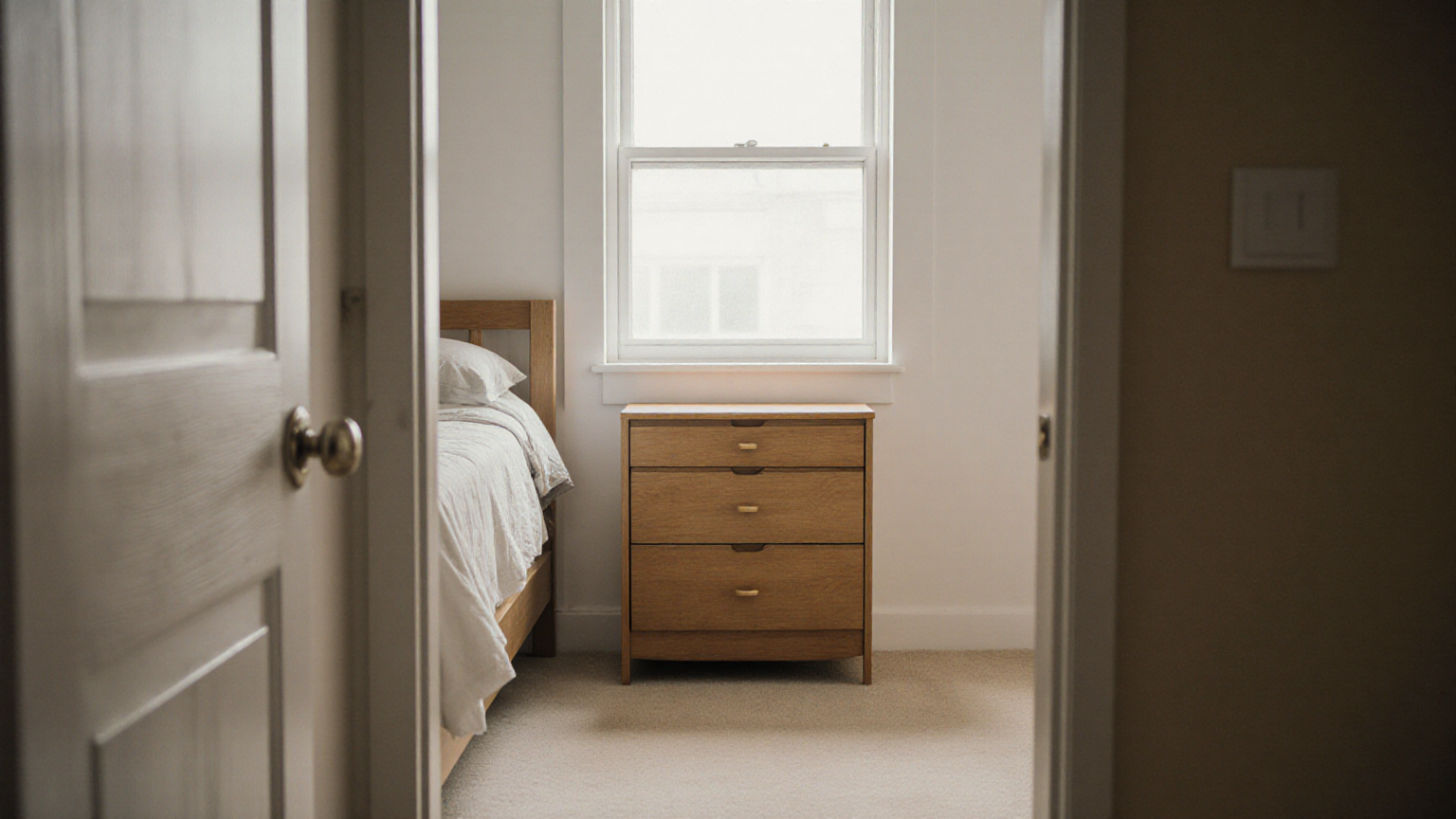
Preserve emergency paths while reducing tip-over exposure
Anchoring a dresser in a bad location can trade one hazard for another. Keep doors, windows intended for escape, heating equipment, electrical panels, and walking routes clear. The renter bedroom emergency layout guide explains how to measure door swing, bedside movement, and window access. Use that route map before choosing the final furniture position.
Avoid putting tall furniture beside a bed where a falling unit could cross the sleeping area. Do not create a climb sequence with a chair, toy bin, low shelf, and dresser. Keep television cords and remote controls from attracting climbing. When a lower, wider unit can meet the storage need, it may reduce leverage, but low furniture can still tip and may still require restraint.
Treat the restraint as a system, not a strap
A restraint includes the furniture attachment point, wall attachment point, fasteners, connector, geometry, installation torque, and ongoing condition. The weakest element controls the result. Use the furniture manufacturer’s instructions and supplied or specified hardware when available. Do not attach to thin decorative panels unless the instructions identify them as structural. Do not mix components merely because they fit together.
After installation, confirm that the unit sits level, drawers operate normally, the restraint is not twisted or rubbing a sharp edge, and the wall or furniture shows no damage. This is inspection, not destructive pull-testing. CPSC’s clothing-storage-unit guidance helps connect the federal rule with manufacturer responsibilities, but consumers should still follow the exact instructions for their own unit (CPSC business guidance).
Reposition storage so daily behavior supports safety
A safety plan fails when frequently used items require reaching high or opening several loaded drawers. Put dense items low, everyday clothing between knee and shoulder height, and lightweight seasonal items higher only when the unit and access method allow it. Use the small entryway drop-zone guide to keep bags and keys from migrating onto tall furniture.
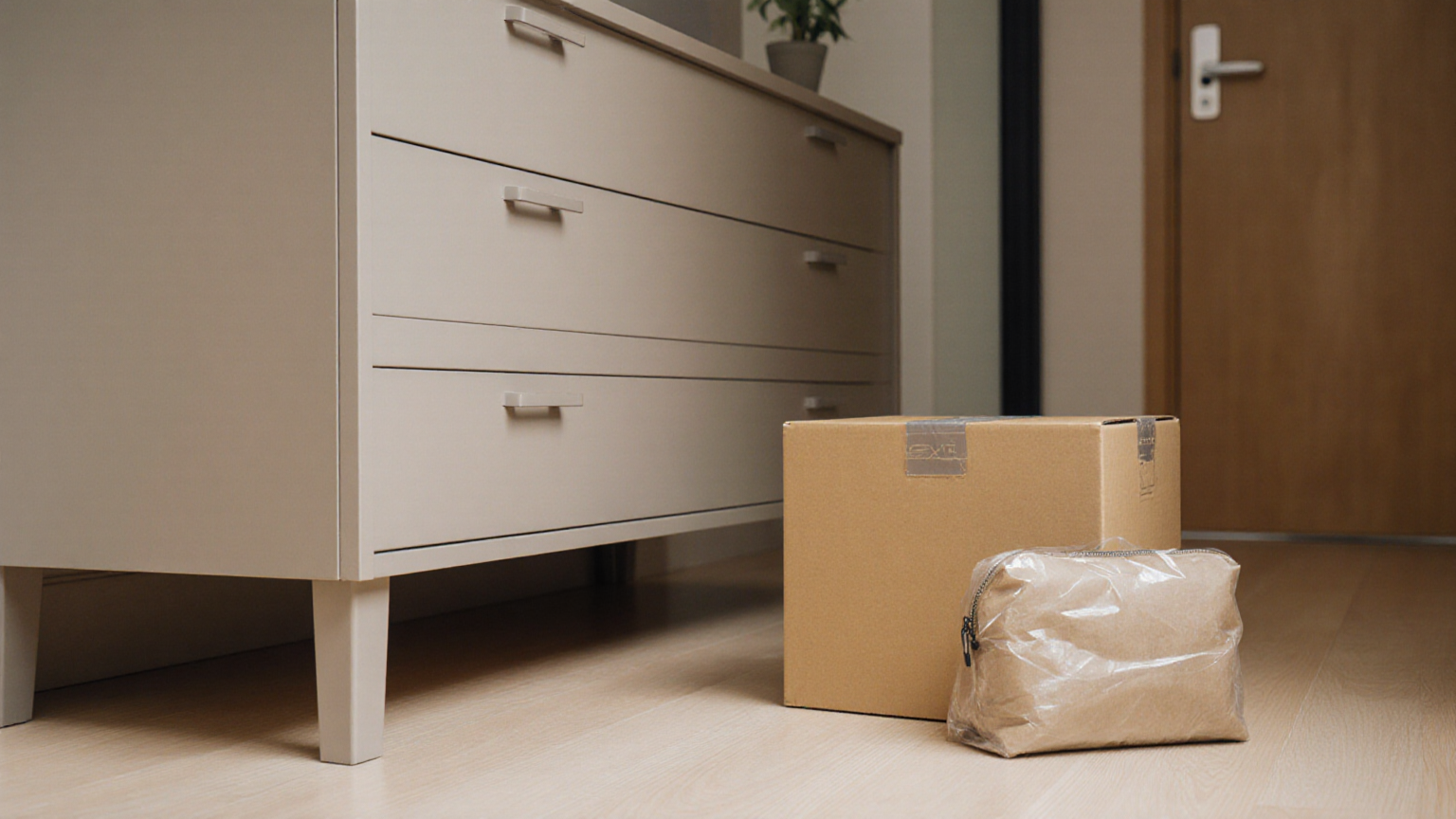
Compare storage capacity in usable terms rather than exterior volume. Count drawers that can open without blocking a walkway, shelves reachable without climbing, and the wall area needed for the required restraint. The multifunctional furniture comparison can help evaluate space efficiency, but safety and manufacturer instructions should outrank novelty features.
Compare replacement options with a safety-first scorecard
When replacement is the safer path, compare candidates using evidence that can be checked. Record whether the exact model includes restraint instructions and hardware, whether replacement hardware is available, whether the unit is subject to a recall, and whether the intended wall location can accept the specified installation. Add practical dimensions: loaded height, depth, drawer extension, clear walking width, and distance from a bed or exit. Do not use a homemade numerical “safety score,” because one unknown critical condition can outweigh several convenient features.
| Replacement question | Acceptable evidence | Warning sign |
|---|---|---|
| Is restraint required and included? | Manual for the exact model | Retail photo without instructions |
| Can the wall attachment be installed? | Landlord and qualified installer confirmation | Unknown wall and generic anchor kit |
| Does the layout stay clear? | Measured drawer and door swing | Furniture overlaps the exit path |
| Can the household use it safely? | Heavy items fit low and daily items are reachable | Children must climb or adults must overreach |
Used furniture deserves the same check. Missing model information, altered back panels, water damage, loose joints, and absent hardware increase uncertainty. A low purchase price does not justify keeping a unit that cannot be installed and used as instructed. If the seller cannot provide the manual, search the manufacturer and recall databases before bringing the item into the home.
Plan for children, guests, and changing routines
A room can become higher risk without any furniture moving. A visiting child may climb, a new television may add cords and remote controls, or a seasonal storage change may put heavy objects high. Explain the no-climbing rule, but do not rely on supervision or rules alone. Close access to an unresolved room, remove attractions, and complete the durable restraint or replacement plan.
Recheck the layout after a crib becomes a bed, a child begins walking, mobility changes, or a roommate rearranges the room. These are predictable transitions, so add them to the household calendar as inspection triggers rather than waiting for visible instability.
Create a move-in and move-out record
Before installation, photograph the wall, baseboard, furniture attachment point, and included hardware. Save the manual, written permission, installer invoice, and recall check. At move-out, do not simply cut a strap and leave a damaged wall or unsecured dresser for the next occupant. Follow the agreed repair process and keep the unit restricted until it is safely removed or reinstalled.
When transferring or selling furniture, include the restraint hardware and instructions if the manufacturer permits reuse, disclose missing parts, and share any recall information. Never market a unit as “tip-proof.” Stability depends on use, installation, condition, and environment.
Monthly and seasonal inspection
Check after moving the unit, changing flooring, a child entering a new climbing stage, an earthquake or impact, remodeling, or visible loosening. Look for stretched connectors, loose screws, wall damage, cracked furniture panels, uneven feet, and new climbable objects. Recheck the recall database periodically for older items.
Five-minute room check
- Drawers and doors close normally without dragging or leaning.
- Heavy objects are low and climbable attractions are removed.
- Required restraints are present and undamaged.
- Door, window, and walking routes stay clear.
- The wall and furniture attachment points show no cracking.
- Manuals, permissions, and recall records are saved.
Limitations and urgent boundary
This article cannot identify a hidden wall utility, approve a fastener, interpret a lease, certify furniture, or replace manufacturer instructions. If furniture is falling or someone is trapped or injured, call emergency services and do not attempt a risky solo lift. Product recalls and local housing rules can change; verify them at the time of action.
FAQ
Can a landlord prohibit every furniture anchor?
Lease and local rules vary. Ask in writing and use local tenant resources, but reduce exposure immediately while the durable solution is resolved.
Are anti-tip kits interchangeable?
No. Compatibility depends on the furniture structure, wall, fasteners, geometry, and manufacturer instructions.
Does moving heavy items to lower drawers replace anchoring?
No. It can reduce leverage, but it does not replace a required restraint.