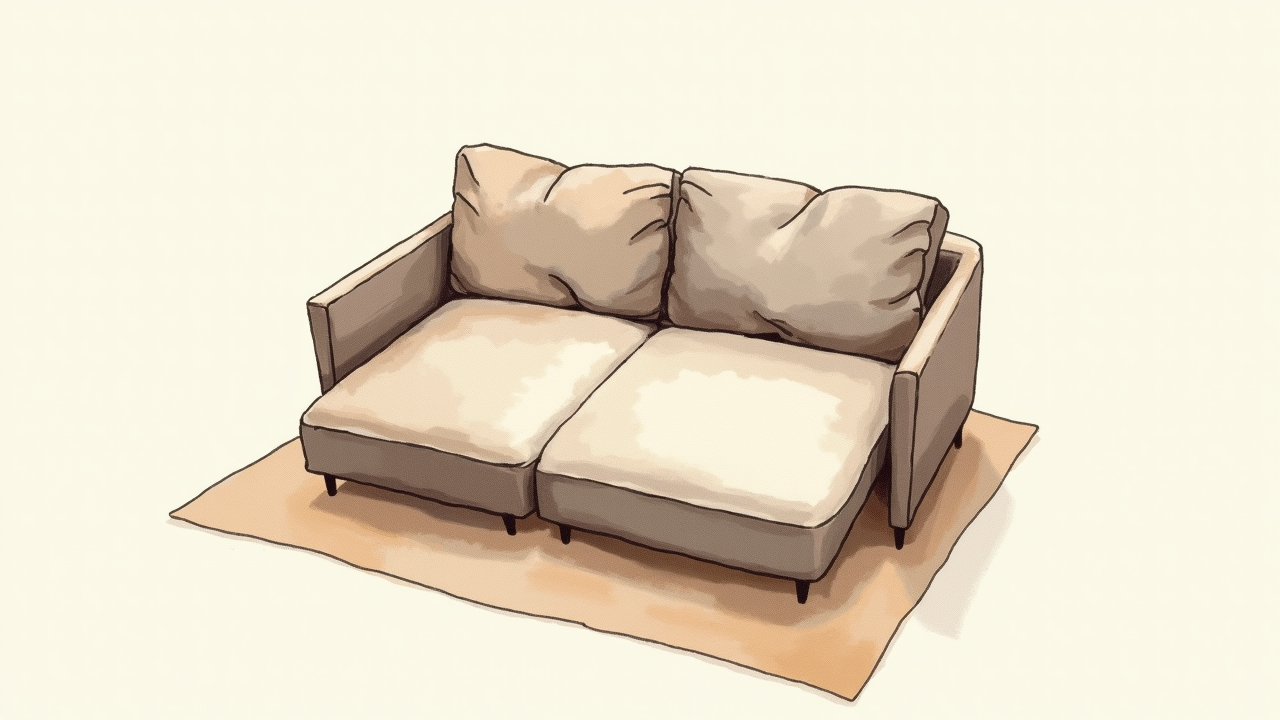
Multifunctional furniture is the highest-leverage purchase category for small-space living. The right sleeper sofa, Murphy bed, or expandable table can recover dozens of square feet of usable floor space. This article walks through Wirecutter testing, Apartment Therapy strategies, and the actual quality/price/durability data for the most-used multifunctional categories.
The TL;DR: sleeper sofas serve dual seating + guest bed roles ($700-2,500 typical). Murphy beds recover 4-6 sq ft of daily floor space ($1,500-5,000). Expandable dining tables fit small daily + larger entertaining ($250-1,000). Storage ottomans add hidden capacity ($150-500). Match the multifunctional piece to your specific space constraint.
For complementary content, see studio apartment layouts and storage small spaces.
Sleeper sofas — most common multifunctional piece
Why sleeper sofas matter
Most studios and 1BRs need both:
- Daily seating for living area
- Occasional sleeping for guests
Sleeper sofas combine both. The alternative (separate sofa + air mattress) requires storage space for air mattress and pump.
Top picks (Wirecutter + Apartment Therapy composite)
Premium tier ($1,800-3,000)
-
West Elm Henry sleeper ($2,000-2,500) — Wirecutter top pick
- Comfortable mattress (queen)
- Tool-free conversion
- 13-year limited warranty
- Available in many fabrics
-
Article Sven sleeper ($1,800-2,200)
- Mid-century design
- Hidden mechanism
- Comfortable for occasional use
- Direct-to-consumer pricing
-
Crate & Barrel Lounge II sleeper ($2,200-2,800)
- Premium build
- Multiple fabric options
- Wider seat depth
Mid-tier ($800-1,500)
-
IKEA Friheten ($700-900)
- Wirecutter “best for budget” pick
- Storage compartment under chaise
- L-shape configurations
- Solid for occasional use
-
IKEA Holmsund ($800-1,100)
- Storage in chaise
- Replaceable covers
- Comfortable for light overnight use
-
Wayfair / Costco options ($600-1,200)
- Variable quality — check reviews carefully
- Often heavily discounted
Budget tier ($500-800)
- IKEA Friheten when on sale ($600)
- Wayfair sleepers under $700
- Often compromise on mattress quality
What to evaluate
- Mattress thickness — 5-6+ inches for sleep comfort
- Mechanism — pull-out (most common) vs click-clack (cheaper, less comfortable)
- Daily comfort as sofa — does it sit well?
- Fabric durability — performance fabrics resist stains
- Storage — many sleepers add storage in chaise
- Configuration — L-shape vs straight; reversible chaise
Common mistakes
- Buying cheapest sleeper expecting comfortable nightly sleep
- Choosing sleeper-only-when-rare-guests when you actually need daily storage
- Underestimating size — measure carefully, especially for narrow doorways

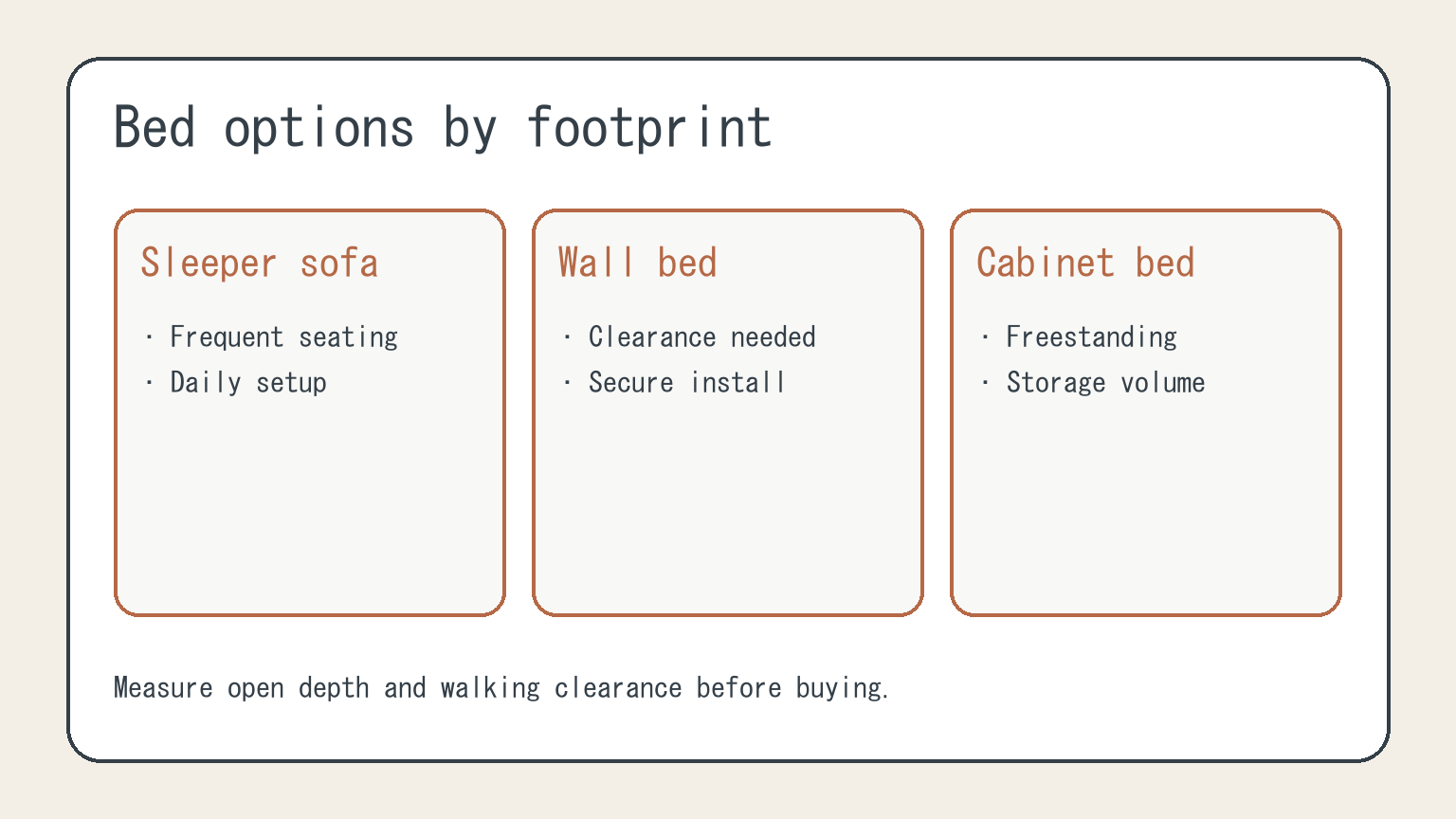
Murphy beds (wall beds)
Why Murphy beds matter
In true studios (250-450 sq ft), the bed dominates floor space. Murphy beds recover 4-6 sq ft of daily floor space (when bed is up).
Quality tiers
Premium ($3,000-12,000) — Resource Furniture
- Italian-engineered Clei mechanisms
- Integrated with shelving, desks, sofas
- Lifetime durability
- Custom fit
- Showrooms NYC, Los Angeles
Mid-tier ($1,500-3,500) — Bestar, Bredabeds, Inval
- Quality mechanisms
- Pre-fabricated in fewer sizes
- 10-20 year mechanism warranty
- DIY assembly possible
IKEA Pax-style hacks ($800-1,500 DIY)
- Use IKEA Pax wardrobes + Murphy bed mechanism kits
- DIY install
- Aesthetic close to commercial Murphy beds at ~30% cost
- Hardware kits from MurphyBedHardware.com, Hardware Resources
Budget DIY / kits ($500-1,500)
- Mechanism kits + custom-built cabinet
- Requires woodworking skills
- Great option for handy renters in long-term arrangement
Installation considerations
Renter’s perspective: Most landlords don’t allow Murphy bed installation due to wall mounting requirements. Always get written permission. Some “freestanding” Murphy beds (cabinet bed style) don’t require wall attachment but cost premium.
Owner’s perspective: Murphy bed installation typically requires:
- Wall mounting points (lag bolts into studs)
- Floor leveling
- Sometimes structural reinforcement
- Professional install: $500-2,000 typical
Cabinet beds (Murphy bed alternative)
Cabinet beds (different from Murphy beds):
- Bed folds into a cabinet that doesn’t require wall attachment
- Examples: Cabinet Bed by Night & Day Furniture
- $1,500-3,500
- Renter-friendly (no wall attachment)
- Slightly less floor space recovery than wall-mounted
For renters wanting Murphy bed benefits, cabinet beds often the practical choice.
Expandable dining tables
Why expandable tables matter
Studios and 1BRs need both:
- Daily small dining surface (1-2 person, often combined with workspace)
- Occasional larger dining for entertaining (4-6 people)
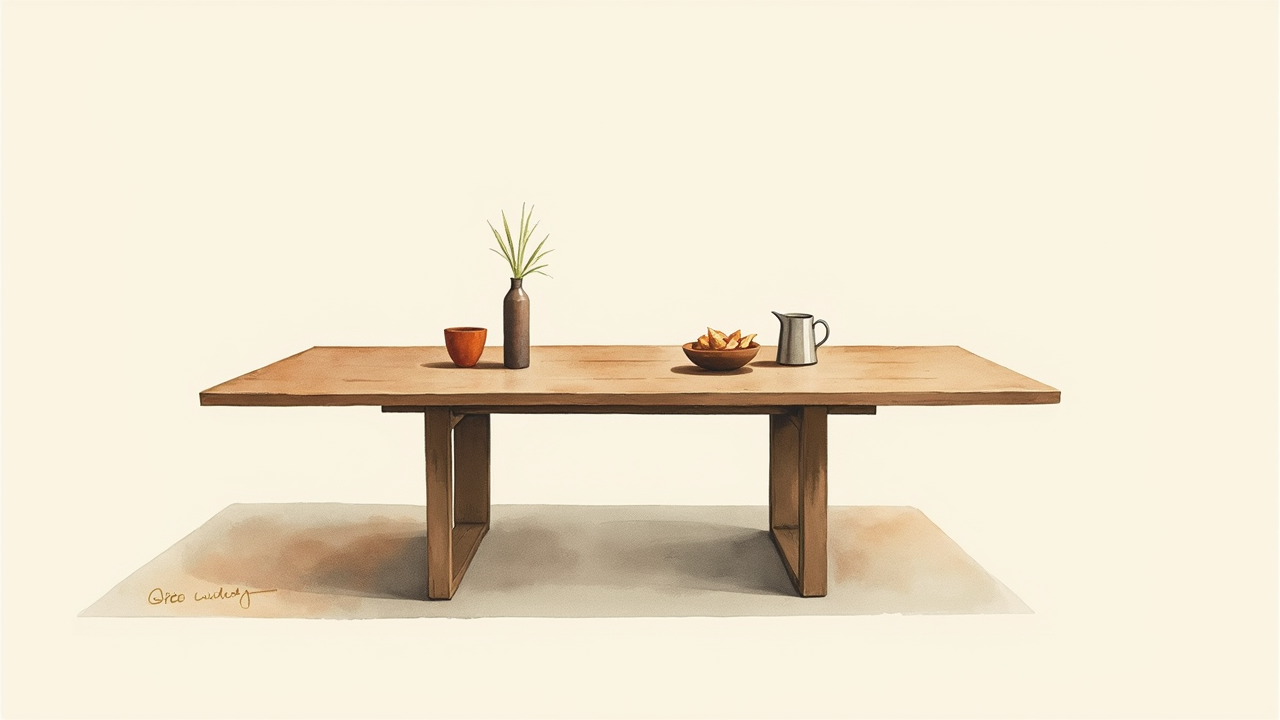
Expandable tables solve both with one footprint.
Mechanism types
Drop-leaf (gateleg)
- Sides fold down when not needed
- Typical sizes: 10-12” closed, 65-72” open
- Most economical
- IKEA Norden ($200-300), IKEA Ingatorp ($200-350)
Butterfly leaf
- Hidden leaf folds out from middle
- Cleaner look than gateleg
- More expensive
- West Elm, CB2 options
Pedestal extending
- Round to oval
- Most stable when extended
- Can serve 2-8 people
- Premium furniture stores
Console-to-dining
- Narrow console (10-15”) expands to full dining
- Resource Furniture, Boconcept signature pieces
- $1,500-5,000+
- Best for true studio space recovery
Top picks
- IKEA Norden gateleg ($250) — Wirecutter budget pick
- IKEA Ingatorp round expandable ($300) — round-to-oval
- Article Madera extending ($800-1,200) — mid-tier
- CB2 Carbon expandable ($800-1,500)
- Crate & Barrel Bramble ($1,000-1,500) — premium
- Resource Furniture Goliath ($3,500-7,000) — extreme expansion (console to 10-person)
Stability considerations
Cheaper expandable tables wobble when extended. Tests Wirecutter conducts:
- Place full water glass at extended end; bump opposite end firmly; does it spill?
- Lean on extended portion with body weight; significant flex?
For frequent entertaining, prefer mid-tier ($600+) for stability. For rare extension, IKEA budget is sufficient.
Storage ottomans
Why storage ottomans matter
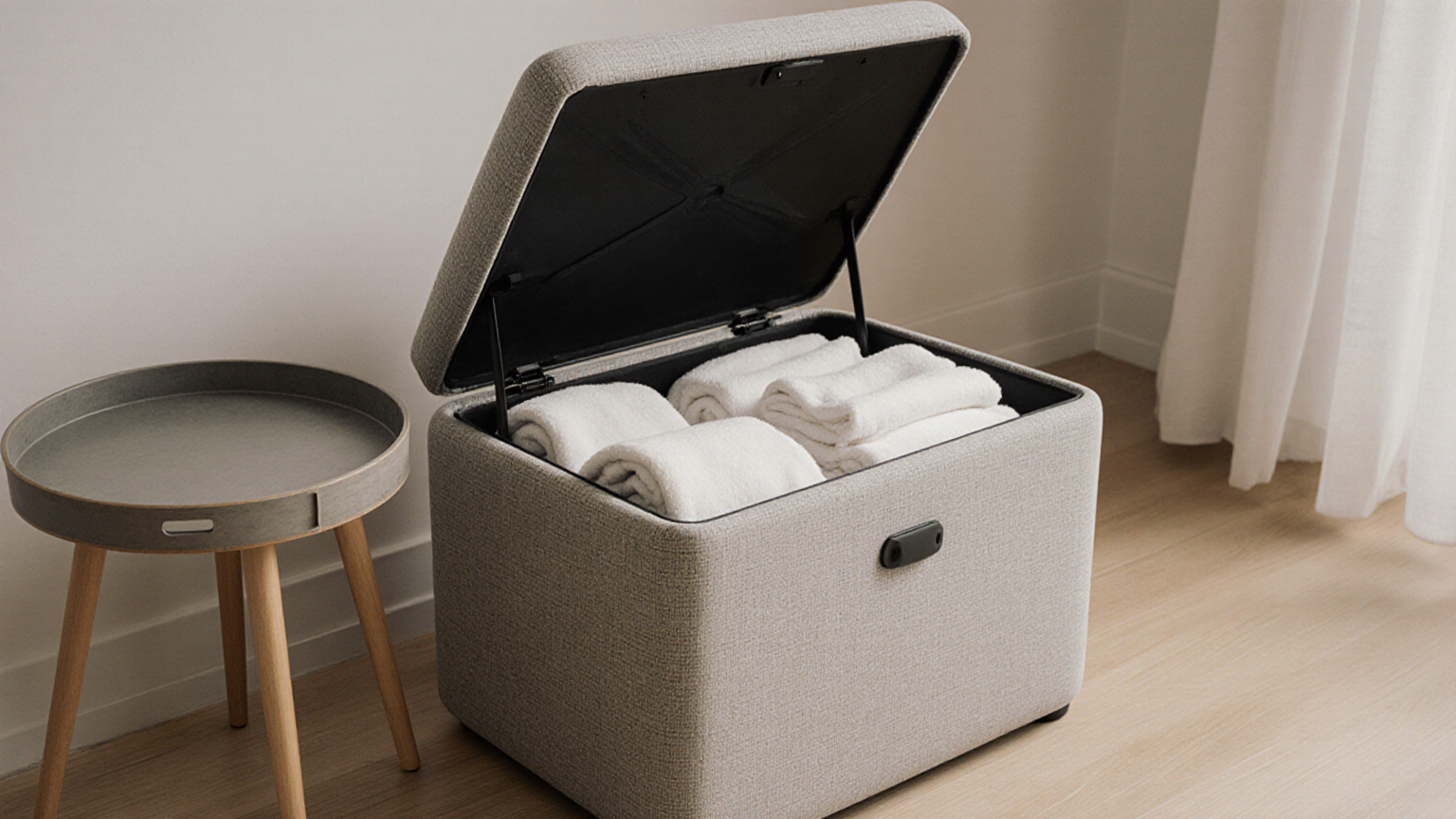
Combine three uses:
- Footrest for sofa
- Coffee table (with tray on top)
- Hidden storage
Replace dedicated coffee table + dedicated storage with one piece. Recovers 2-4 sq ft of floor space in typical living room.
Sizes
- Small (16-20”) — single footrest, modest storage. $80-200.
- Medium (24-30”) — coffee table-sized. $150-400.
- Large (40-50”) — substitute for sectional ottoman. $300-800.
Top picks
Premium ($300-600)
- Burrow Block ($300-500) — Wirecutter top pick
- West Elm Hudson storage ottoman ($350-500)
- Crate & Barrel Vista ($400-600)
Mid-tier ($150-300)
- IKEA Stocksund ($200-280)
- Article Mirin ($200-300)
- Wayfair quality picks (variable; Wirecutter recommends specific models)
Budget ($60-150)
- IKEA basic storage ottomans
- Costco options
- Often plywood frame; expect 2-3 years lifespan
What to evaluate
- Frame material — solid wood beats particleboard
- Lid mechanism — soft-close beats slam-shut for daily use
- Storage capacity — measure interior dimensions; some look bigger than they are
- Top stability — does it handle drinks/laptop without flexing?
- Fabric — performance fabrics resist daily wear
Modular sofas
Why modular matters in small spaces
Standard sofas commit to one configuration. Modular sofas (Vimle, Kivik from IKEA; Sven/Aabel from Article; Build Your Own from West Elm) reconfigure as life changes.
Use cases:
- Studio: 2-seat couch becomes 3-seat with ottoman extension
- Hosting: rearrange for movie viewing vs conversation
- Moving: smaller pieces fit through doorways and elevators
- Future-proof: add modules as space changes
Top picks
Premium ($2,000-5,000)
- West Elm Build a Sectional — wide configuration options
- Article Sven sectional — mid-century, modular
- CB2 Modular sectionals — modern aesthetic
Mid-tier ($1,000-2,500)
- IKEA Vimle ($1,200-2,500) — most flexible IKEA modular
- IKEA Kivik ($1,000-2,000) — slightly less modular
- Burrow Nomad ($1,500-2,500) — designed for moving
Budget ($500-1,200)
- IKEA Friheten sectional (also has sleeper variant)
- Wayfair sectionals — variable quality
Doorway / elevator considerations
Critical for apartment buildings:
- Measure doorway widths (typical 32-36 inches)
- Elevator width (often 36-44 inches)
- Stairs (turn radius matters)
Modular sofas designed for moving (Burrow, IKEA flat-pack) avoid the “sofa stuck in stairwell” problem common with traditional sectionals.
Other multifunctional pieces
Storage benches
- Foot-of-bed bench with internal storage
- Entryway bench with shoe storage
- IKEA Hemnes ($150-250), West Elm benches ($300-500)
Trundle beds
- Daybed with second bed pulling out
- Useful for kids’ rooms or guest rooms
- $500-1,500 typical
Lift-storage beds
- Mattress lifts on hydraulic mechanism
- Massive storage underneath (50+ cubic feet)
- $800-2,500
- Requires specific bed frame
Console / desk hybrids
- Narrow console that becomes desk when needed
- IKEA Lillasen / Alex
- West Elm pieces
- Budget: $200-400
Convertible bunk beds
- For kids’ rooms in small homes
- Convert from single bed to bunk bed
- Some have desk underneath
Build a small-space outfit
True studio (250-400 sq ft)
- Sleeper sofa (Friheten budget, Henry premium): $700-2,500
- Murphy bed (alternative to sleeper if space is critical): $1,500-5,000
- Expandable dining table (Norden gateleg or Resource console): $250-3,500
- Storage ottoman: $150-300
- Modular shelving (Kallax 2x4): $90
Budget total: ~$1,200-3,200 Premium total: ~$5,000-12,000
1BR small (450-700 sq ft)
- Modular sofa (Vimle 3-seat): $1,500-2,000
- Sleeper sofa (replace if also need guest bed): or add sleeper chair
- Expandable dining: $300-1,000
- Storage ottoman: $250-400
- Bedroom storage bed: $500-800
Budget total: ~$2,500-4,000 Premium total: ~$8,000-15,000
When to invest premium vs budget
Invest premium for daily-use pieces:
- Bed (you spend 1/3 of life in it)
- Sofa (used hours daily)
- Dining/work table (used daily)
Save budget for occasional-use pieces:
- Sleeper component of sofa (rarely opened)
- Expansion mechanism (rarely engaged)
- Storage ottoman top (occasional drink resting)
The split-tier strategy: premium where it matters, budget where it doesn’t, achieves the best total experience per dollar.
Common mistakes
Buying multiple multifunctional pieces
Layering 5 multifunctional pieces creates visual clutter. 1-2 strategic multifunctional choices + standard quality elsewhere often works better.
Ignoring quality on daily-use items
A $700 sleeper sofa used as primary bed nightly will fail within 2 years. Match quality to use frequency.
Overpaying for transformer features you won’t use
Resource Furniture’s $8,000 transforming pieces are excellent — but only worth it for the 250-400 sq ft true studio. For larger spaces, fixed dedicated pieces often better.
Not measuring doorways/elevators
Sectional that won’t fit through your door is a $2,000 problem. Always measure first.
Buying based on photos not in-person
Multifunctional pieces especially benefit from in-person testing. Visit IKEA showroom or showrooms with actual examples.
Bottom line
For small-space multifunctional furniture:
- Sleeper sofa for dual sofa + guest bed — Wirecutter picks West Elm Henry premium / IKEA Friheten budget
- Murphy bed for true studios where bed dominates — Resource Furniture premium / IKEA Pax DIY budget / cabinet bed for renters
- Expandable dining table — IKEA Norden budget / Crate & Barrel premium
- Storage ottoman — combines footrest + coffee table + storage
- Modular sofa — reconfigures, fits through doorways, future-proofs
Match piece to actual space constraint. Don’t buy transformer pieces for spaces that don’t need them. Match quality to use frequency.
For complementary content, see studio apartment layouts and storage small spaces.
Multifunctional furniture picks that earn their footprint
For sub-700 sqft studios and one-bedrooms, every piece needs to pull double duty. These three furniture categories return the most usable square footage per dollar based on independent ergonomic and durability reviews:
DHP Emily Convertible Futon Sofa Sleeper
Price · $280-380 — best-selling sofa-bed under $400
+ Pros
- · Splits cleanly between full-size bed and three-seat sofa
- · Tufted linen upholstery survives daily fold-out without sagging
- · Steel frame supports up to 600 lbs combined load
− Cons
- · Mattress is firm by design — pair with 2-inch foam topper for guests
- · Assembly takes 60-90 minutes for one person
Paid affiliate link. Price, availability, and ratings can change; verify details on the retailer page before buying.
VASAGLE Lift Top Coffee Table (with Hidden Storage)
Price · $130-180 — table that doubles as desk and storage
+ Pros
- · Lift top raises to laptop height — instant standing desk for couch
- · Hidden storage compartment holds remotes, magazines, blankets
- · 32-inch top accommodates two laptops side by side
− Cons
- · Lift mechanism rated for ~10 lb top weight — not for heavy stacking
- · Particle board core; assembly required (~45 min)
Paid affiliate link. Price, availability, and ratings can change; verify details on the retailer page before buying.
Tribesigns Folding Wall-Mount Desk
Price · $140-200 — disappears when not in use
+ Pros
- · Wall-mounted, folds flat against wall when not in use
- · Built-in shelving for monitor + supplies, 24-inch width fits 2 monitors
- · Hardwood + steel construction; supports up to 100 lbs
− Cons
- · Requires wall studs (2 minimum) — measure before purchase
- · Fixed height — pair with a stool that matches the mount level
Paid affiliate link. Price, availability, and ratings can change; verify details on the retailer page before buying.
The DHP futon + Tribesigns wall desk combo transforms a studio into a “two-room” feel by separating sleep and work zones using furniture, not walls.