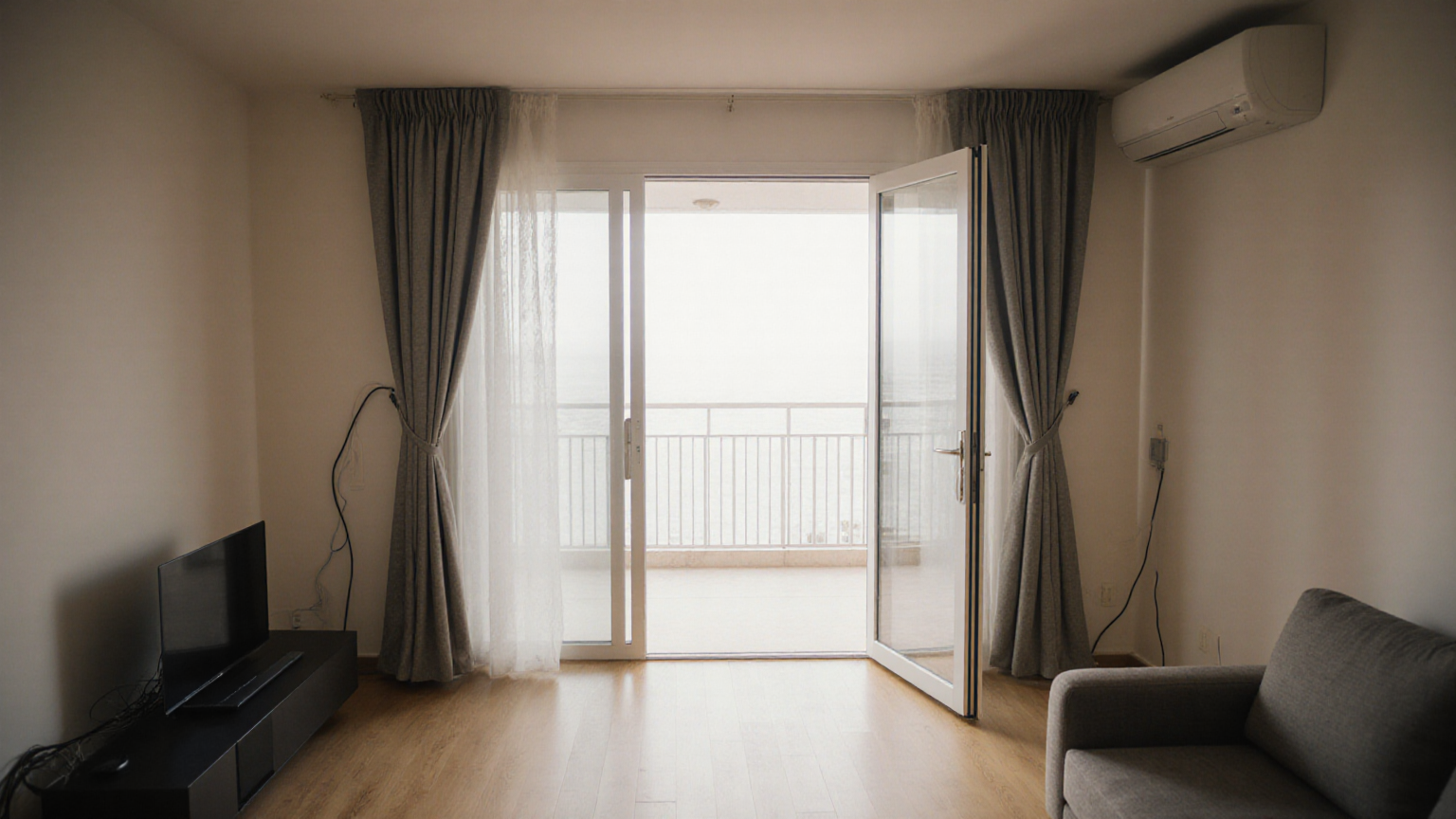
A small apartment can have a stove, a window, and still have poor cooking ventilation. The important question is not whether air moves somewhere; it is whether pollutants leave the apartment without pulling smoke from outdoors, disturbing a flame, blocking an exit, or creating an unsafe fan and cord setup. The EPA’s indoor-air framework puts source control first, then ventilation, then filtration. That order is useful for renters because it begins with actions that do not require cutting a wall.
Identify what equipment actually does
A hood shape does not prove outdoor exhaust. Open the cabinet only if it is safe and permitted, read the appliance manual, and look for a visible duct path. A ducted hood carries air outside. A recirculating hood passes air through filters and returns it to the room. An over-the-range microwave can be configured either way. A bathroom fan is not a kitchen exhaust substitute, and an operable window is only useful when outdoor conditions and airflow direction cooperate.
Create an inventory:
| Item | What to verify | Renter-safe evidence |
|---|---|---|
| Hood or microwave | Model, filter, exhaust direction, working speeds | Manual and wide photo, no disassembly |
| Window | Opening size, screen, security, outdoor source | Measurement and weather direction |
| Portable fan | Stable base, guarded blades, cord condition | Manufacturer instructions |
| Smoke and CO alarms | Presence, test status, landlord responsibility | Date tested; no sensor modification |
| Make-up air path | Interior door gap or open path | Sketch of rooms and closed doors |
Do not remove a grille, drill a duct, bypass a switch, or tape a fan into an appliance opening. If the installed hood does not work, submit a maintenance request rather than treating a portable fan as a permanent repair.
Map the apartment as an airflow path
Draw the kitchen, nearest window, exterior door, hallway, bedrooms, smoke alarms, and fuel-burning appliances. Mark where outdoor smoke, traffic exhaust, restaurant exhaust, pollen, or wildfire smoke can enter. EPA warns that ventilation should be evaluated carefully when outdoor pollution sources are nearby.
The goal is a short path from the cooking source toward an exterior opening, with people and clean rooms upstream. In a studio, that may mean opening the kitchen window and a second opening slightly, then placing a fan at the kitchen window to exhaust outward. In a one-bedroom unit, close the bedroom door and keep the route from the stove to the kitchen window unobstructed. Air should not be driven across an open flame.
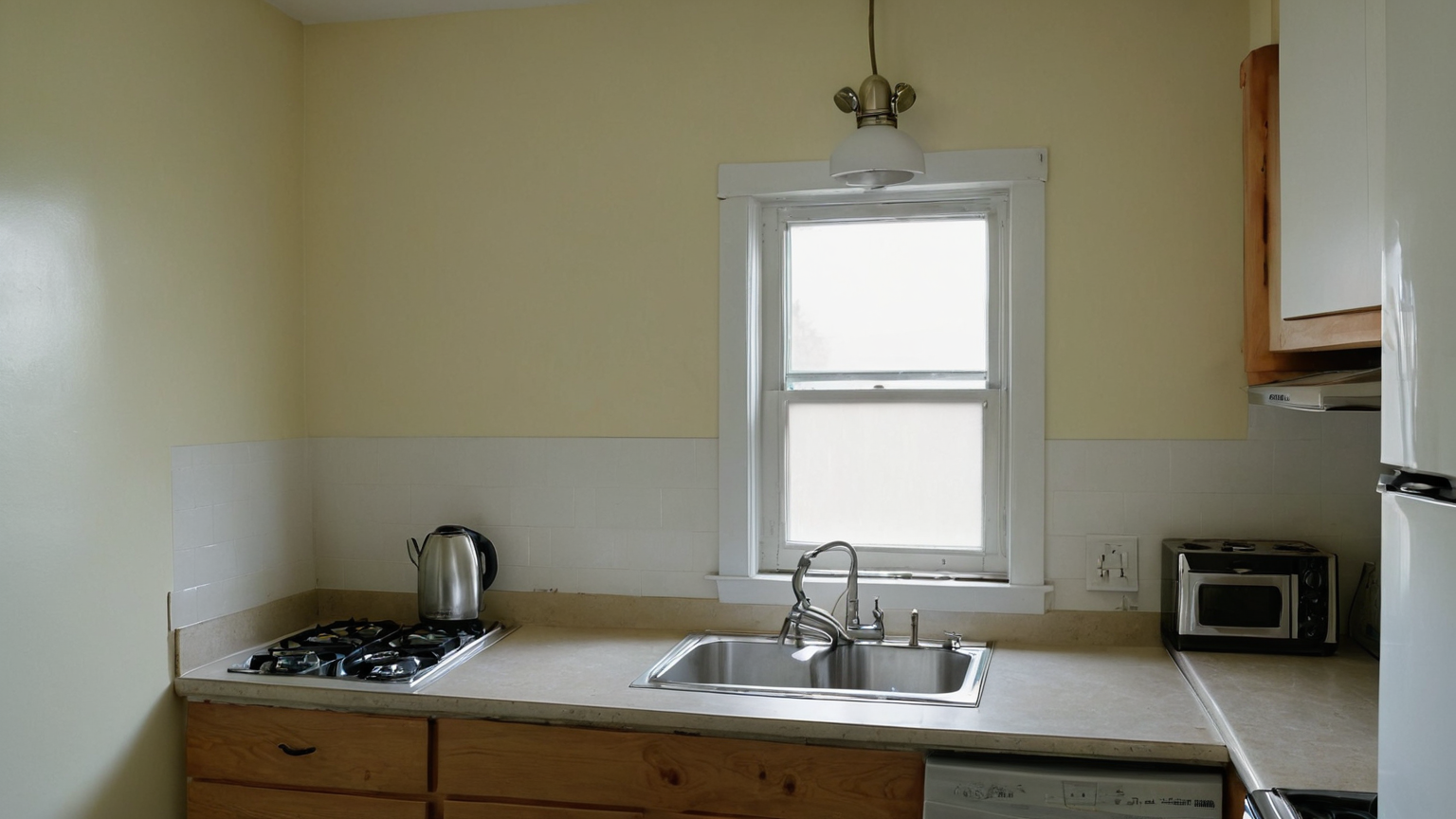
Use a tissue strip near the window frame—well away from flame and hot surfaces—to observe direction. Do not use smoke, incense, aerosol, or a candle as a test. If the strip consistently moves inward, the fan or opening arrangement is not exhausting. If the range flame changes shape or color, stop the portable airflow experiment, turn off the burner when safe, and seek maintenance or utility guidance.
Reduce emissions before trying to move them
Source control is often the highest-value step. Match the pan to the burner, avoid empty-pan preheating, lower heat once food reaches temperature, use lids when appropriate, and choose a rear burner under a functioning hood when the appliance instructions support it. Clean grease using the product instructions and never mix cleaners. Keep combustibles, paper, towels, and portable fans away from the cooking zone.
The U.S. Fire Administration cooking guidance emphasizes staying in the kitchen while frying, grilling, or broiling. Ventilation does not make unattended cooking safe. If a pan smokes repeatedly at a normal recipe setting, stop and inspect cookware, residue, burner size, and appliance performance instead of merely buying a stronger fan.
| Cooking task | Lower-emission adjustment | Ventilation priority |
|---|---|---|
| Simmering water-based food | Lid and moderate heat | Normal exhaust path |
| Searing or frying | Smaller batches and splatter control | Highest available safe exhaust |
| Toasting or broiling | Watch continuously | Functional built-in exhaust if provided |
| Long oven use | Confirm appliance condition | Room ventilation without cross-draft |
Set up a portable window fan safely
A portable fan can support an exhaust route, but it is not a hood. Use a listed household product with an intact cord and guard. Put it on a stable, dry surface at the window, as far from the stove as practical, aimed outward. Prevent tipping and keep the cord out of water, heat, doorways, and walking paths. Do not use an extension cord unless the manufacturer explicitly allows the arrangement and local rules permit it.
Open a second window or interior door enough to provide replacement air, but avoid drawing air from a garage, combustion-appliance closet, dusty construction area, or smoke source. The Department of Energy ventilation overview explains that exhaust ventilation depressurizes a home; that pressure relationship matters when fuel-burning equipment is present.
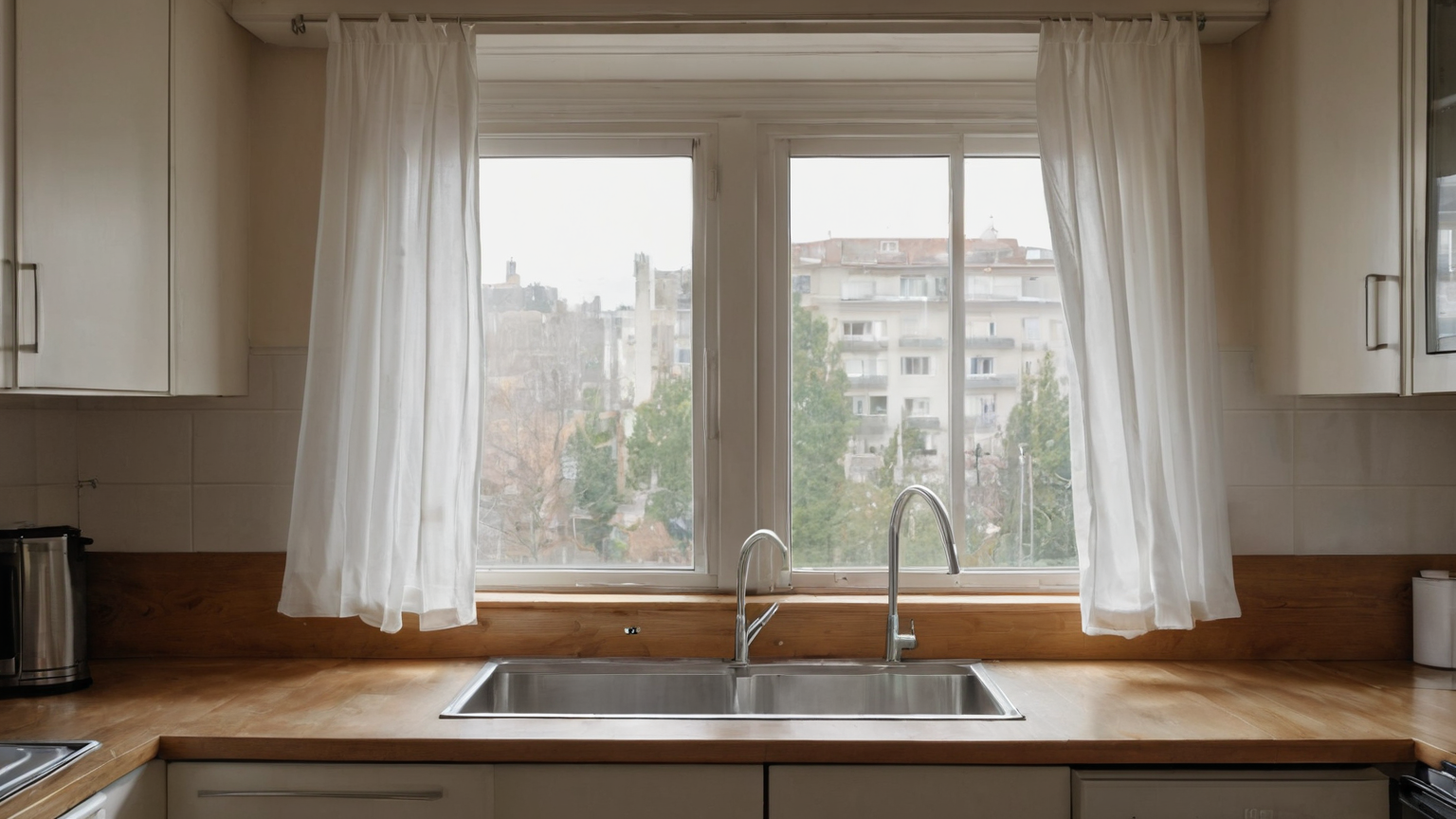
If rain can reach the fan or outlet, do not use it. Remove the fan when the window must be secured or when the setup blocks emergency egress. A window AC opening is not permission to wedge another fan into unsafe gaps; the site’s window AC layout guide covers clearance and cord constraints.
Do not confuse filtration with ventilation
A portable air cleaner can reduce some airborne particles when appropriately sized, placed, and maintained. It cannot move carbon monoxide outdoors, fix combustion, or capture every cooking gas. Never place it beside a burner where heat and grease can damage it. Do not use ozone-generating devices.
For particle support, compare clean-air delivery rate, room size, noise at the speed you will actually use, replacement-filter cost, and a placement with open intake and discharge. Calculate room volume as length × width × ceiling height. A rough air-change estimate is CADR × 60 ÷ room volume, using consistent units. This is a planning comparison, not proof that the kitchen is safe.
A hypothetical 250-cfm cleaner in a 2,500-cubic-foot open room yields about six theoretical air changes per hour before real-world losses. That does not equal six complete removals, and it says nothing about carbon monoxide. Keep the distinction visible in your plan.
Treat combustion and carbon monoxide as hard boundaries
If the apartment has a gas range or other fuel-burning equipment, ventilation experiments must not interfere with combustion or draft. The EPA carbon-monoxide page and CPSC Carbon Monoxide Information Center explain why working CO alarms and maintained appliances matter.
Leave immediately and contact emergency services or the gas utility from a safe location if a CO alarm sounds, you smell gas, see soot, observe persistent abnormal flames, or anyone has sudden headache, dizziness, nausea, confusion, or weakness. Do not search for the source, silence an alarm and continue cooking, or use a fan to “clear” a suspected leak. This article cannot diagnose exposure.
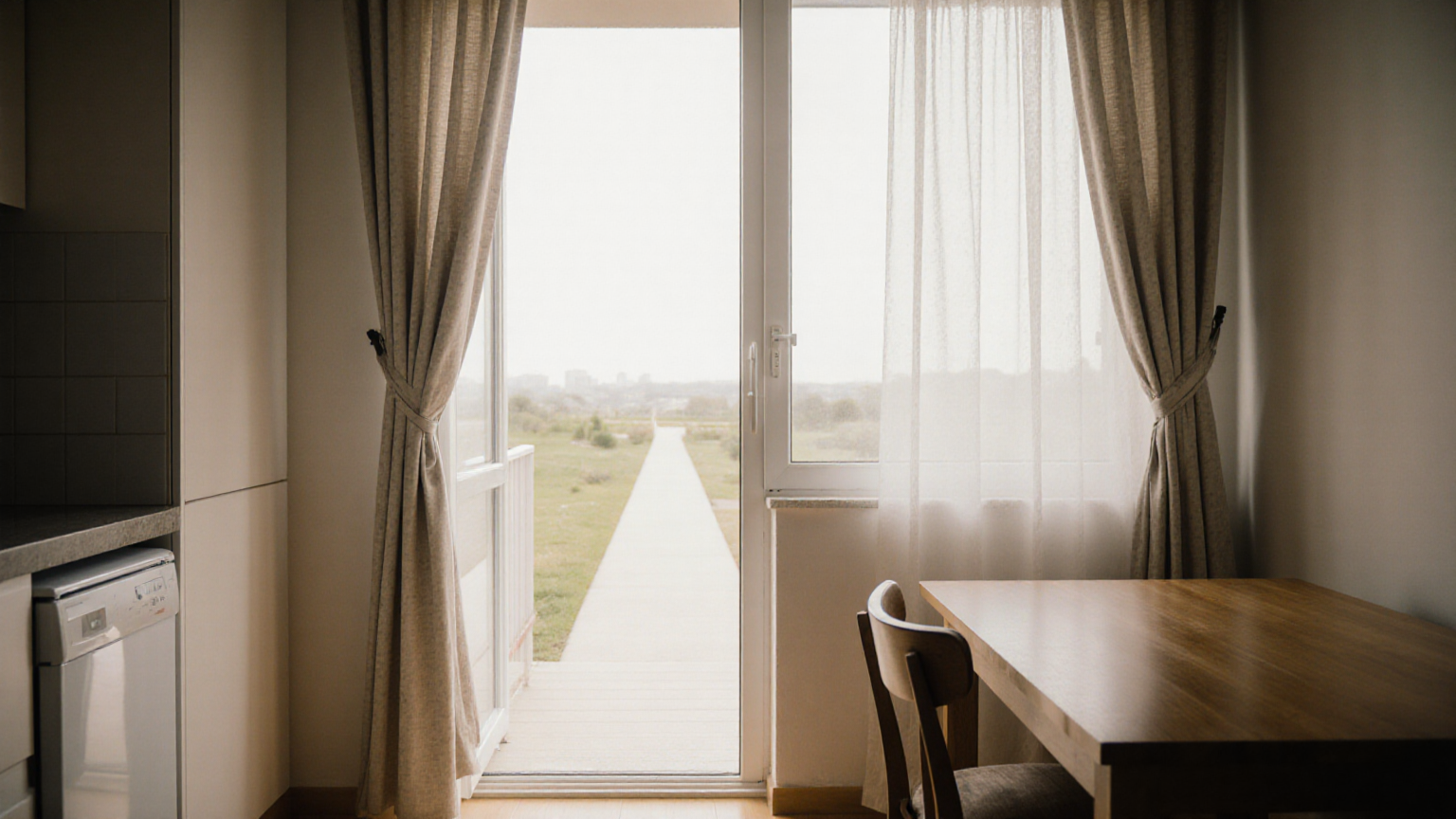
Decide when to ventilate and when to keep windows closed
Outdoor air is not always cleaner. Before opening windows, check wildfire smoke, local air-quality alerts, nearby idling vehicles, restaurant exhaust, construction dust, and extreme heat or cold. During smoke events, keep polluted air out and use the best indoor filtration and source control available. Avoid high-emission cooking methods until outdoor conditions improve.
Create two modes:
Normal outdoor-air mode: built-in exhaust on; safe window fan outward if needed; replacement-air path open; bedroom door closed; air cleaner downstream from clean air.
Poor outdoor-air mode: windows closed; minimize frying and broiling; use lids and lower heat; run a functioning recirculating filter if that is all the apartment has; operate a suitable particle cleaner; ask the landlord about permanent ventilation deficiencies.
No single mode works every day. Record outdoor condition, cooking task, odor or visible smoke, alarm status, and whether air actually moved outward.
Measure results without fake precision
Low-cost particle and carbon-dioxide sensors can reveal patterns, but they do not measure every cooking pollutant and they do not replace CO alarms. Compare the same cooking task, device location, and window setup across several days. Ignore exact-looking app grades that hide the sensor and averaging method.
A practical scorecard uses observable outcomes:
| Metric | Baseline | Trial setup | Pass condition |
|---|---|---|---|
| Visible smoke | Lingers into next room | Record duration | No visible spread beyond kitchen |
| Odor | Strong after 30 minutes | Compare same recipe | Clearly lower, not masked by fragrance |
| Particle trend | Peak and recovery time | Same sensor position | Lower peak or faster recovery |
| Safety | Cord/exit/flame conflicts | Photograph wide layout | Zero conflicts |
A lower particle peak cannot override a flame disturbance, blocked window, overheated cord, or CO alarm.
Send a maintenance request that can be acted on
A useful request describes the installed condition rather than prescribing a renovation. Include appliance model, whether the fan runs, whether air appears to exhaust outdoors, filter condition, dates, persistent smoke or odor, alarm issues, and a request for inspection under the lease and local code. Do not claim a code violation unless the local authority confirms it.
Example: “The installed over-range fan powers on, but air returns through the front grille and smoke remains in the kitchen during normal covered cooking. The filter was cleaned according to the manual on August 24. Please confirm the intended configuration and inspect whether the appliance and required ventilation are operating as designed.”
Ask the property manager for the technician’s finding in writing. If the issue involves a gas appliance, alarm, overheating, or suspected electrical defect, use the urgent maintenance process. Local housing, fire, building, and public-health departments can explain enforcement options.

Compare improvement options
| Option | What it can do | What it cannot do | Renter gate |
|---|---|---|---|
| Clean existing hood filter | Restore some airflow or grease capture | Convert recirculation to outdoor exhaust | Follow manual; no disassembly beyond allowed parts |
| Window exhaust fan | Create temporary outward flow | Capture at the source like a hood | Stable, dry, secure, no exit or flame conflict |
| Particle air cleaner | Reduce some particles | Remove CO or fix combustion | Correct size and safe placement |
| Landlord repair | Restore intended equipment | Guarantee a redesign | Written request and access plan |
| Ducted hood upgrade | Best source capture when designed well | DIY renter project | Owner, permit, code and qualified installation |
If the landlord offers a replacement, compare capture area, airflow at realistic noise, outdoor duct path, make-up air implications, filter access, and maintenance. ASHRAE 62.2 is a technical reference for residential ventilation, but local adopted code and the actual dwelling govern. Do not select equipment from a single advertised cfm number.
Seven-day test plan
Day one: inventory equipment and alarms. Day two: map the route and exits. Day three: cook a low-emission meal using source control. Day four: test safe window exhaust in acceptable outdoor air. Day five: compare particle recovery without changing the recipe. Day six: clean only user-serviceable filters. Day seven: submit maintenance evidence for unresolved issues.
Stop the trial for alarm activation, gas odor, abnormal flame, electrical heat, unstable equipment, rain exposure, or blocked egress. The broader small-apartment indoor-air guide covers humidity and whole-room sources; the small-kitchen clearance guide helps separate ventilation from heat and cord hazards.
The best renter airflow plan is not the strongest fan. It is a repeatable combination of lower-emission cooking, verified equipment, a safe outdoor path when conditions allow, filtration with honest limits, working alarms, and a documented route to landlord repair.