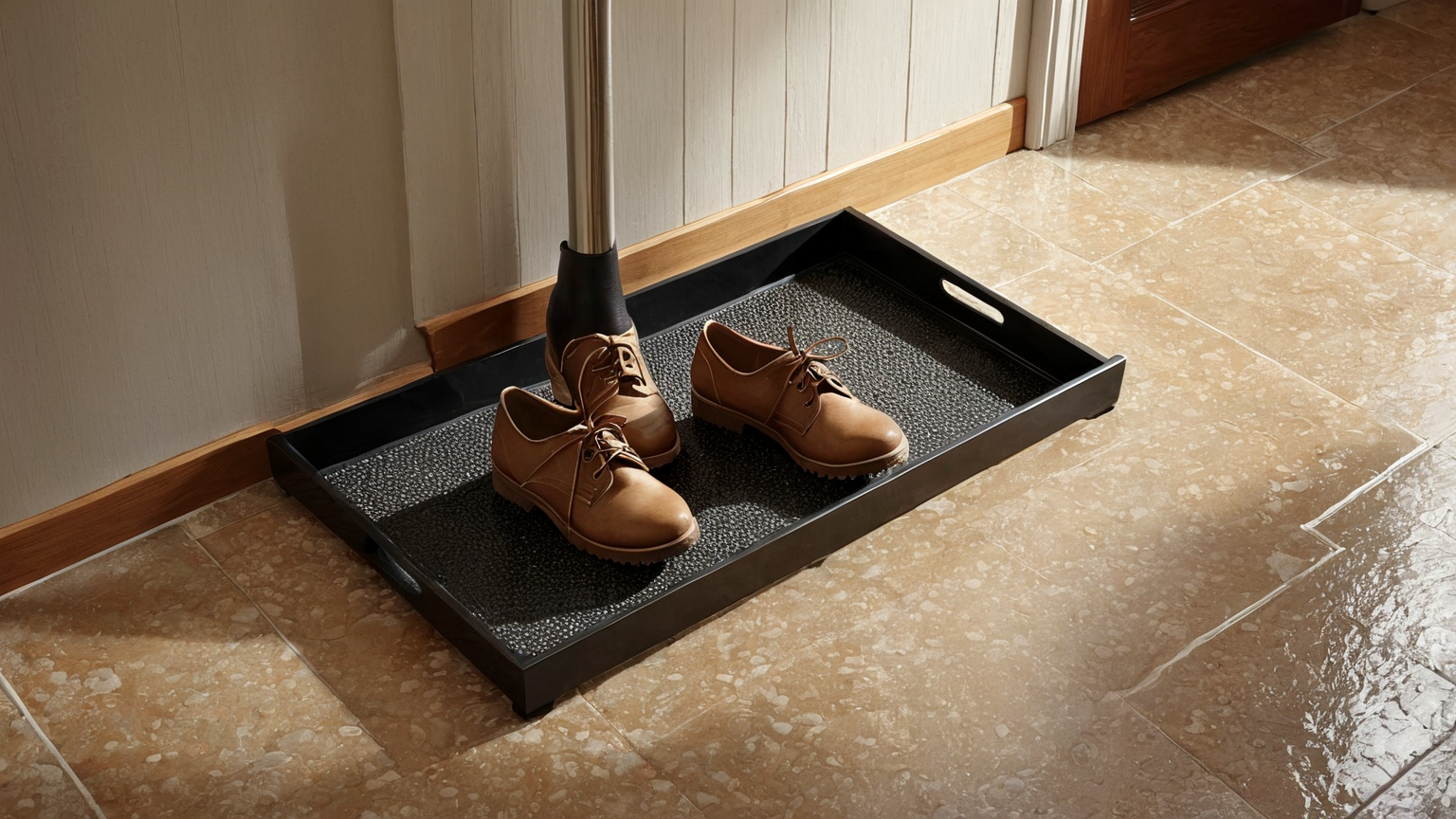
Rainy-day shoes can damage a small rental entry faster than a messy-looking coat pile. Water spreads under mats, leather and fabric stay damp, door swings get blocked, and a “quick dry” shortcut near a heater can create a fire or floor-damage risk. This June 2026 layout keeps the entry clear, washable, and realistic for renters.
Quick decision table
| Decision point | Better default | Avoid |
|---|---|---|
| Door swing | Keep drying zone to the side | Never block exit clearance |
| Wet soles | Use a low tray plus washable mat | Do not trap water under rugs |
| Odor | Create airflow and a weekly reset | Do not seal wet shoes in closed bins |
| Lease concerns | Use removable, non-marking pieces | Ask before fixed hardware |
1. Start with the path, not the tray
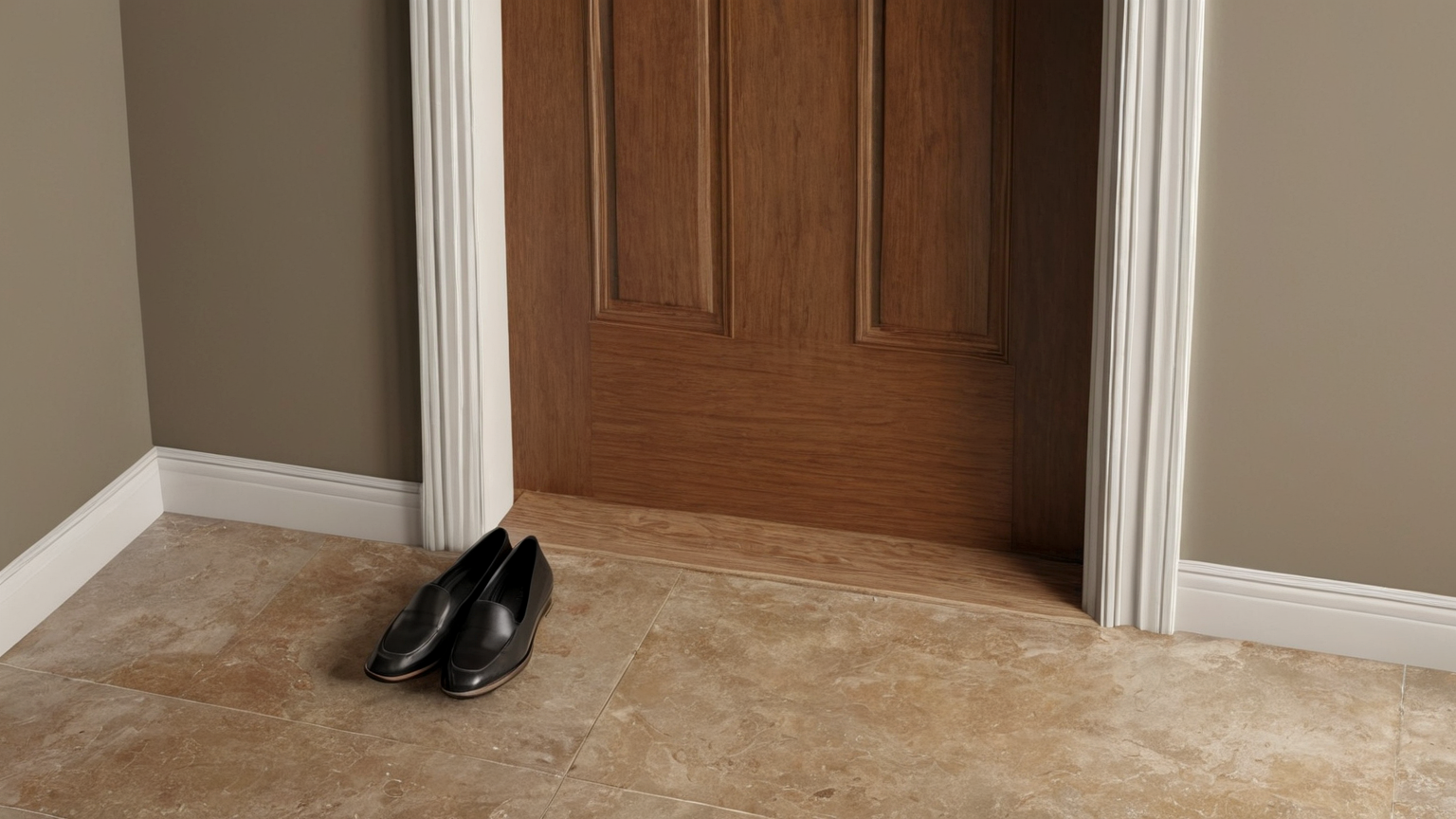
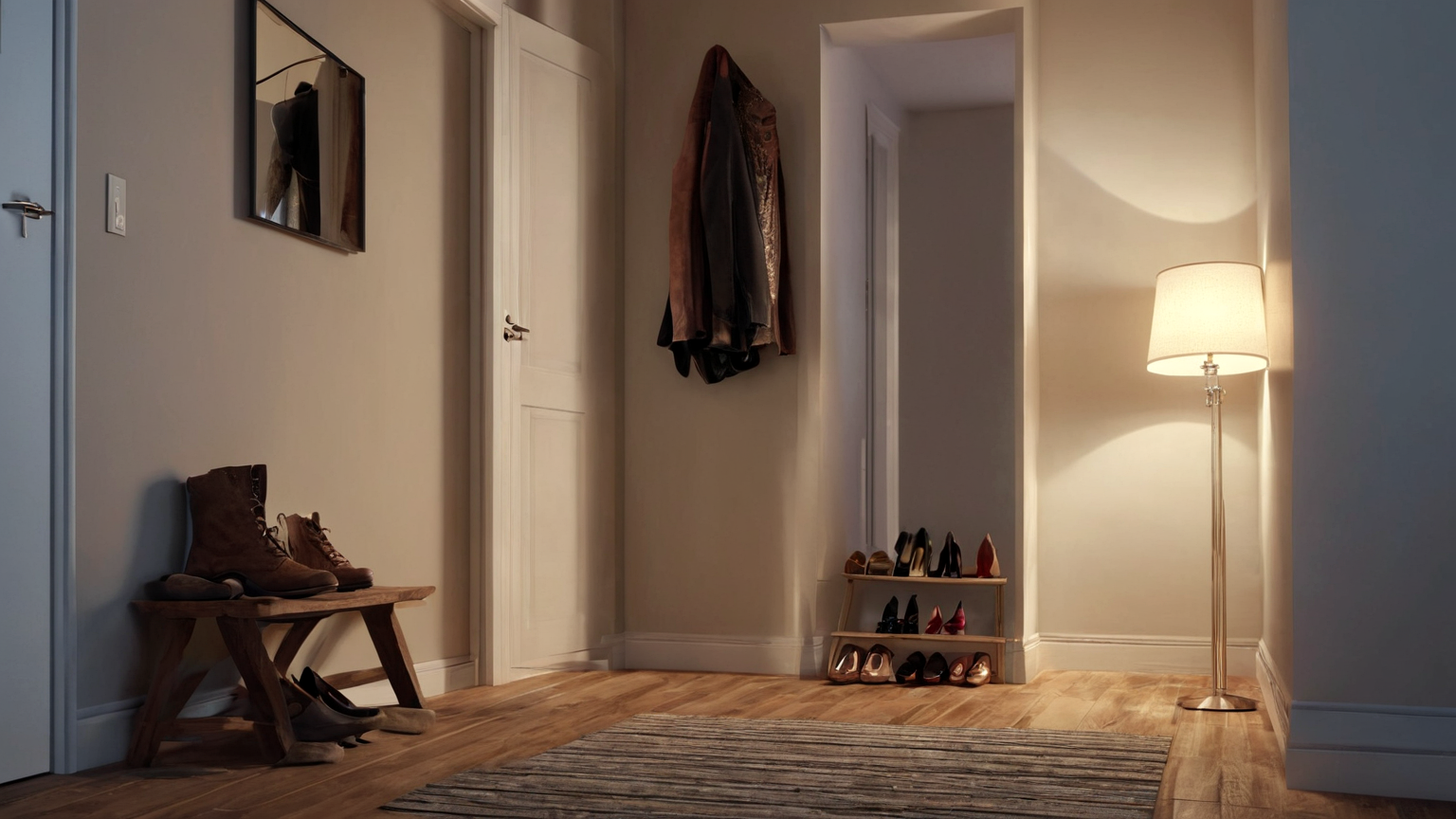
Open the door fully and walk through with a bag in hand. The drying zone belongs outside that path. If a tray forces people to step over shoes, it will fail on the first busy morning and may become a safety problem.
2. Layer protection without trapping moisture
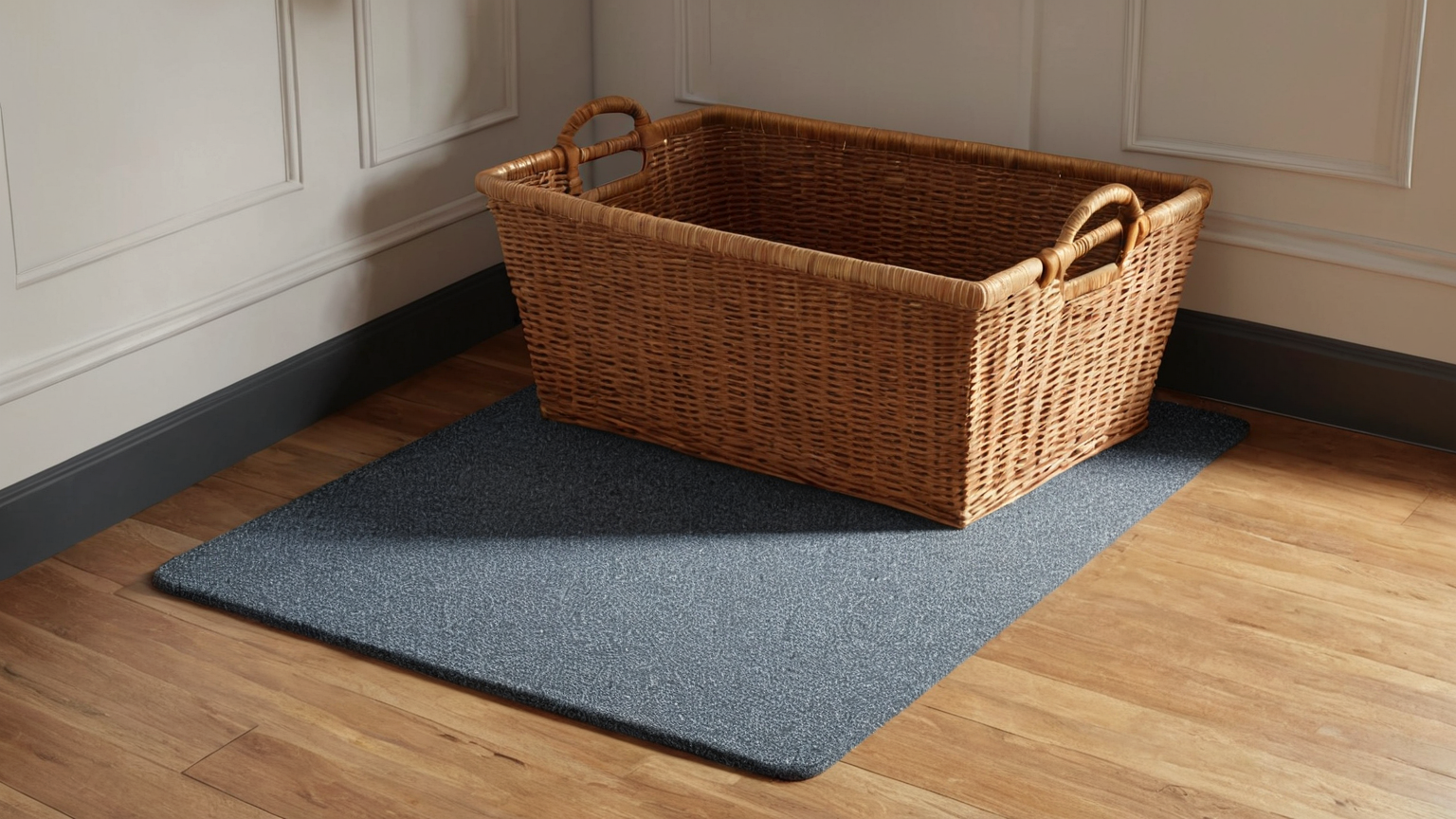
A low tray catches drips, while a washable absorbent mat catches splashes. The mat should be lifted and dried, not left damp against wood or laminate. For delicate flooring, test any backing in a hidden spot and use a breathable layer that does not stain.
3. Dry with airflow, not risky heat
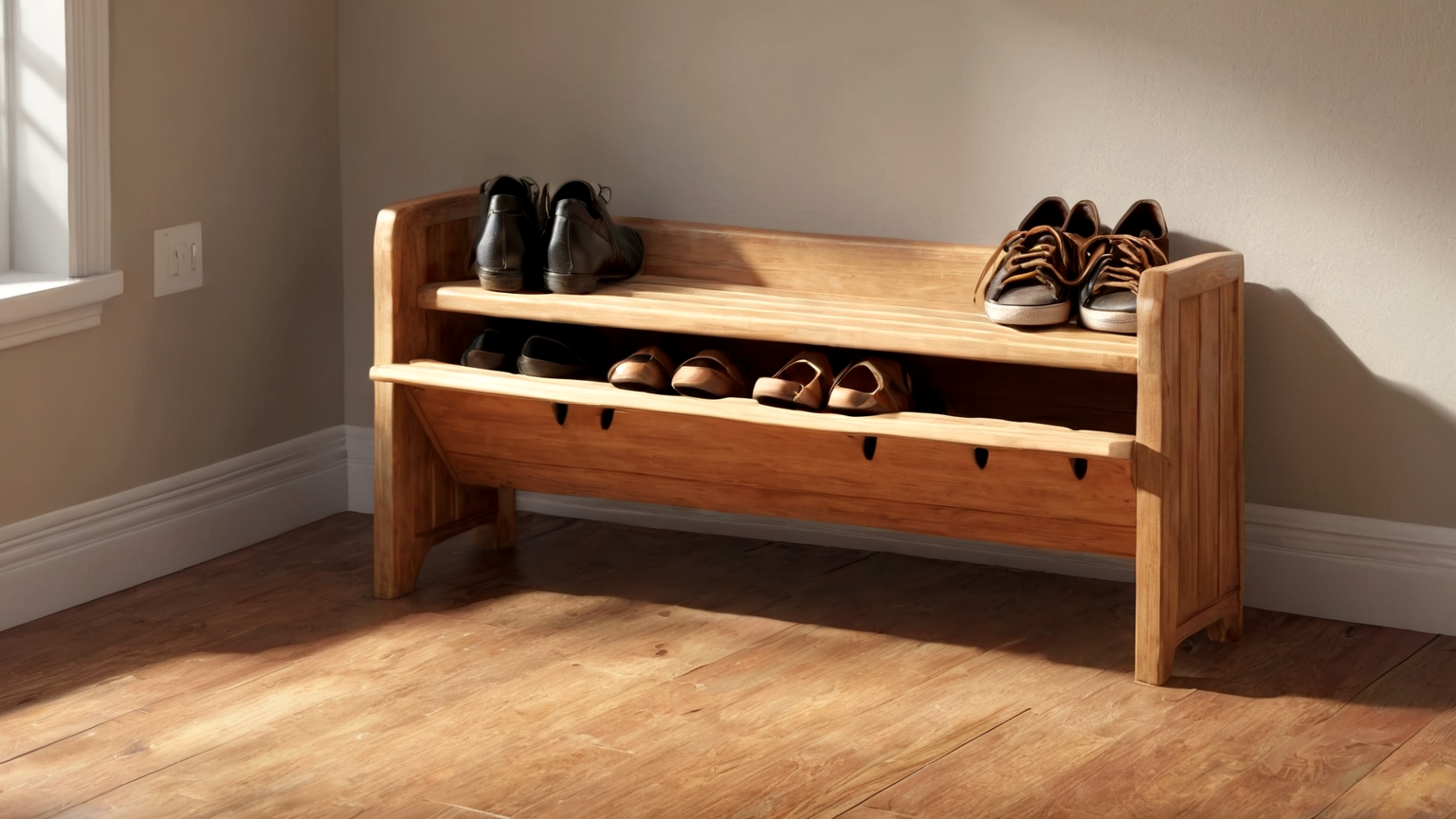
Shoes dry better when air can move around them. Tilt them, remove insoles if appropriate, and avoid placing footwear against space heaters, radiators, or open flames. Heat can damage shoes, dry surfaces unevenly, and create avoidable fire risk.
4. Make the reset visible and small
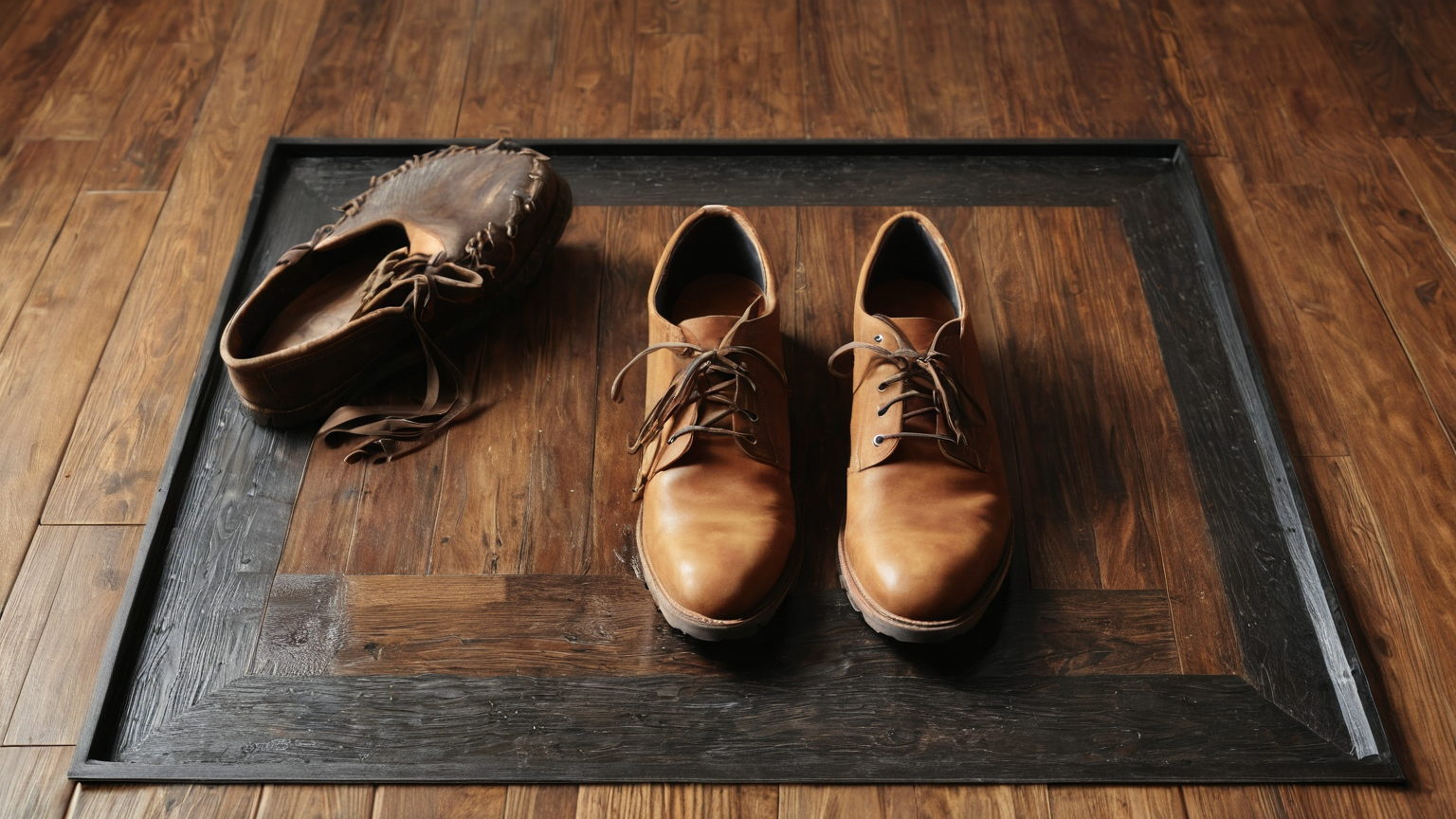
A good rainy entry has a weekly reset: empty the tray, wash or dry the mat, check for odor, and return only the shoes used often. Seasonal boots that stay wet for days belong in a different plan, not in the daily doorway.
Practical checklist
- Keep door swing and hallway clear.
- Dry mats before putting them back.
- Use open airflow for wet shoes.
- Store private mail away from the entry drying zone.
- Avoid permanent hooks or racks without permission.
Troubleshooting
If the entry still smells musty, reduce the number of shoes stored there and improve drying time. If the floor feels damp under the mat, stop using that setup until the surface is dry and the mat backing is checked.
Source-backed boundaries
This guide was checked against current public sources from CDC, Federal Trade Commission, Ready.gov, U.S. EPA. It is practical household guidance, not a substitute for emergency services, lease-specific legal advice, institutional policy, or professional inspection where those are needed.
AdSense-readiness note
AdSense readiness: renter-safe, safety-first floor and moisture guidance; no thin product list; links to related entryway organization posts.
Summary
The useful version of this plan is small, repeatable, safety-aware, and reviewed before the next stressful day arrives.
Why this works better than a shopping list
A shopping list assumes the right object fixes the problem. The better approach starts with the failure mode: blocked access, damp surfaces, privacy leakage, unverified claims, or a routine nobody repeats. Once the failure mode is visible, the tools stay modest. That keeps the article helpful for readers who rent, share space, have a tight budget, or need a safer first step before buying anything.
Weekly review script
Use a short review question set: What changed this week? What failed or almost failed? What can be simplified? What should be removed? What official instruction or policy needs checking again? Writing those answers in plain language creates more value than adding another device, bin, app, or template.