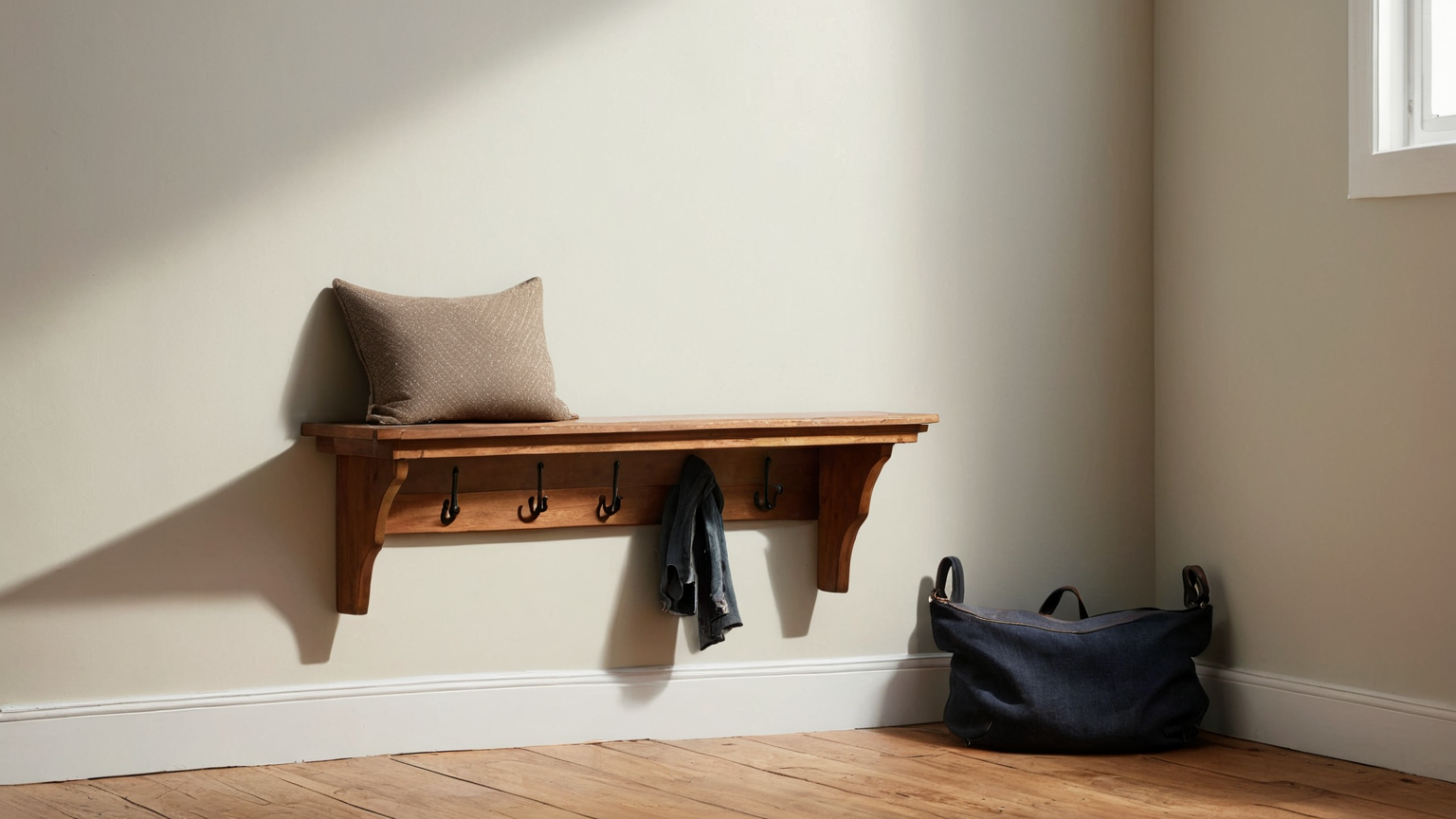
A good entryway landing strip is a tiny operating system for the apartment. It catches wet shoes before they reach rugs, gives keys one reliable home, keeps bags from blocking the walkway, and stops return parcels from becoming floor clutter. For renters, the best design is reversible: freestanding, washable, easy to move, and respectful of lease rules. This June 2026 guide treats the entry as a moisture, heat, trip, and habit problem rather than a shopping list.
The three-zone layout
Divide even a narrow entry into a dry hand zone, a wet floor zone, and a traffic lane. The hand zone holds keys, wallet, transit card, sunglasses, and one current bag. The wet floor zone holds shoes, umbrella drip, and a washable mat. The traffic lane stays open enough for groceries, children, pets, or an older visitor. If one zone expands into another, remove items instead of buying a larger organizer.
Decision table
| Problem | Renter-safe fix | Avoid | Check |
|---|---|---|---|
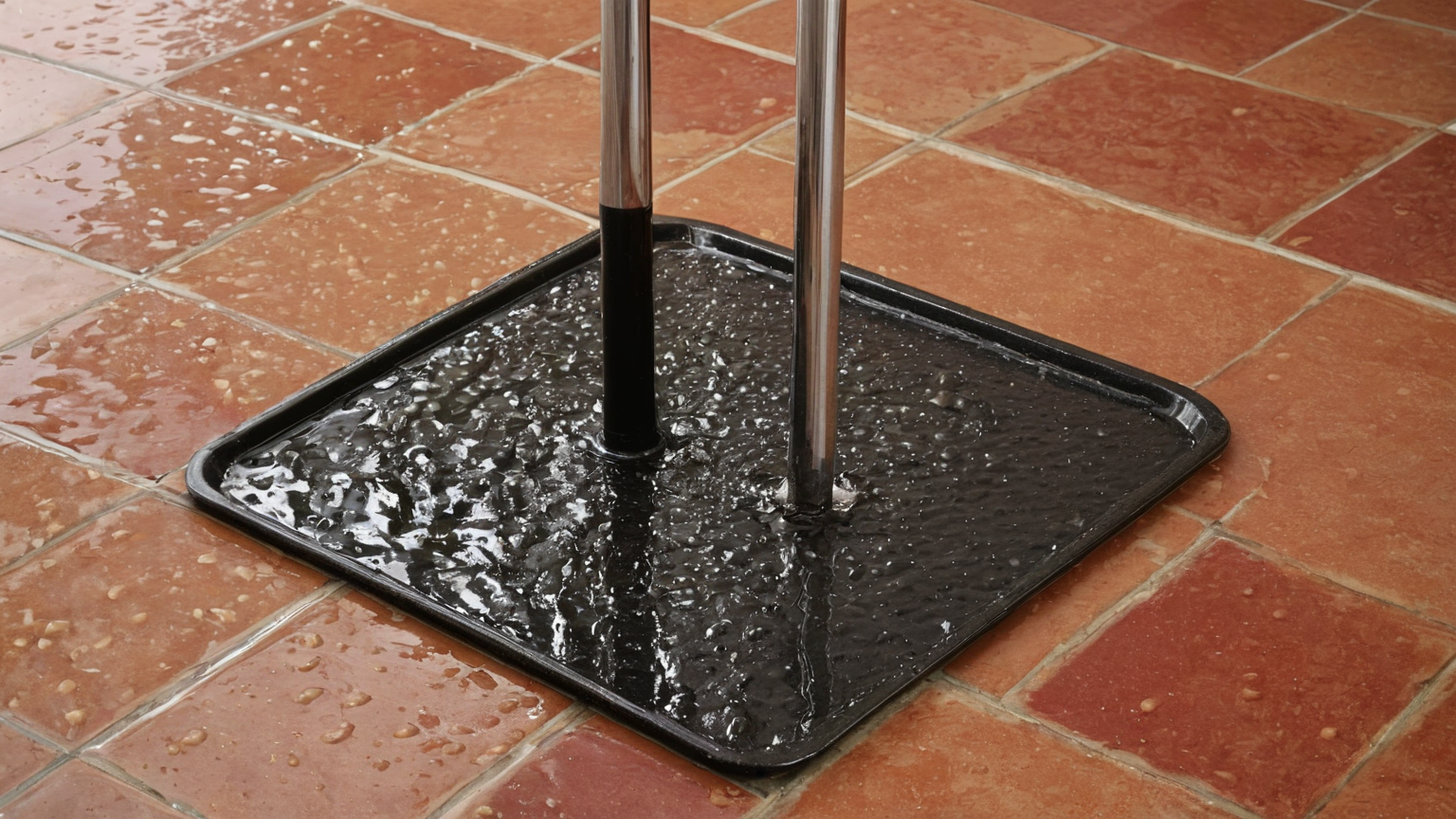
| Wet umbrella | Drip tray with towel rotation | Leaning against painted wall | Floor dries within a few hours |
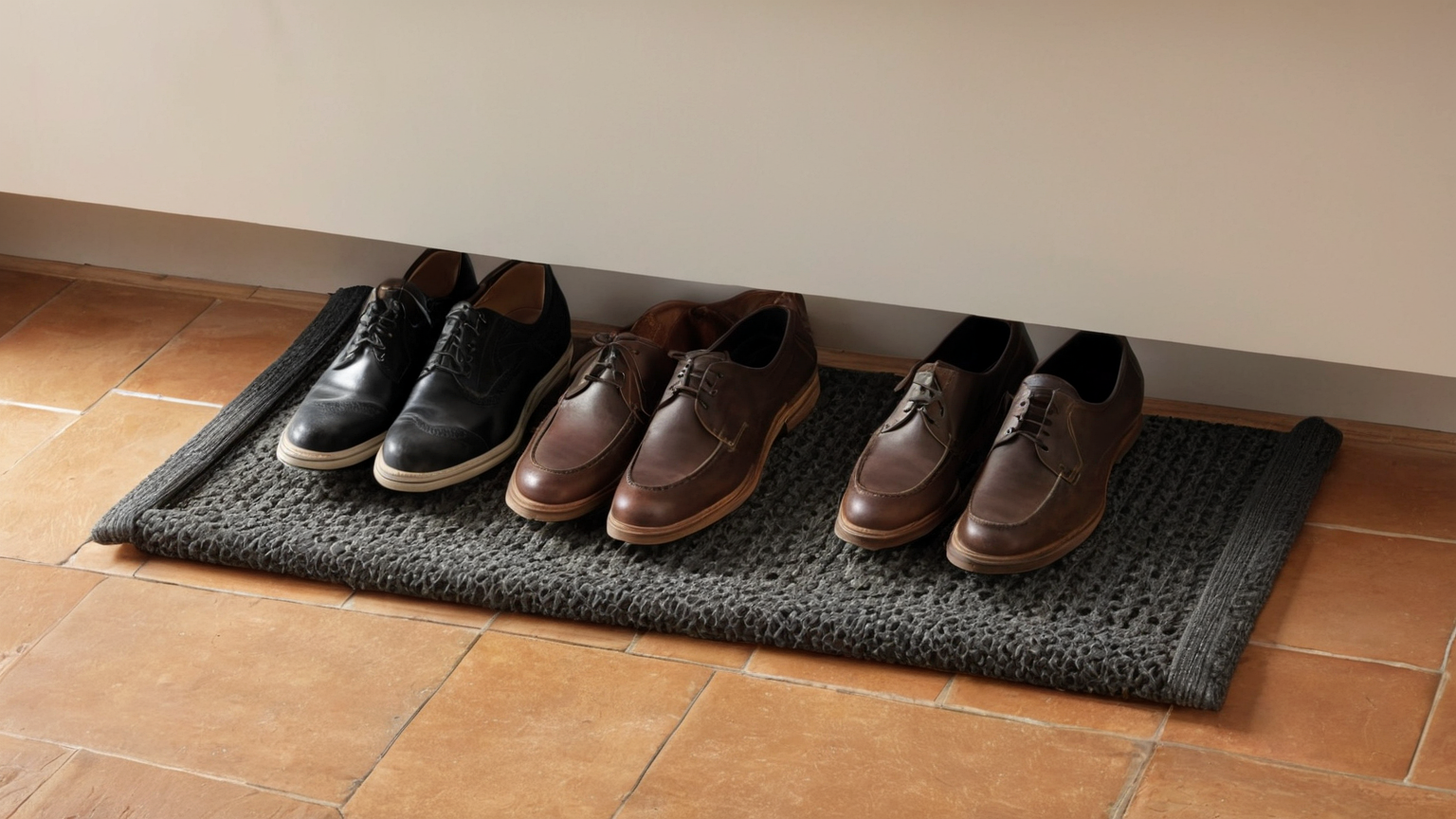
| Shoe odor | Open rack and washable mat | Closed bin for damp shoes | No musty smell next morning |
| Lost keys | One shallow tray | Many decorative bowls | Can you drop keys one-handed? |
| Blocked door | Narrow bench or wall-side rack | Deep cabinet in swing path | Door opens fully |
| Heat buildup | Light airflow and fewer textiles | Dense piles near radiator or heater | Nothing warms unusually |
Moisture is the hidden design constraint
Rain routines fail when wet items are sealed away too quickly. Umbrellas, shoes, and rain jackets need a place to drip and then dry. Use a tray, removable towel, or washable mat that can be cleaned before odor starts. Do not store damp shoes in a closed bench compartment unless they are dry. If an entry wall repeatedly shows moisture, staining, or mold-like growth, document it and follow landlord or local tenant guidance instead of covering it with furniture.
Hooks without risky drilling
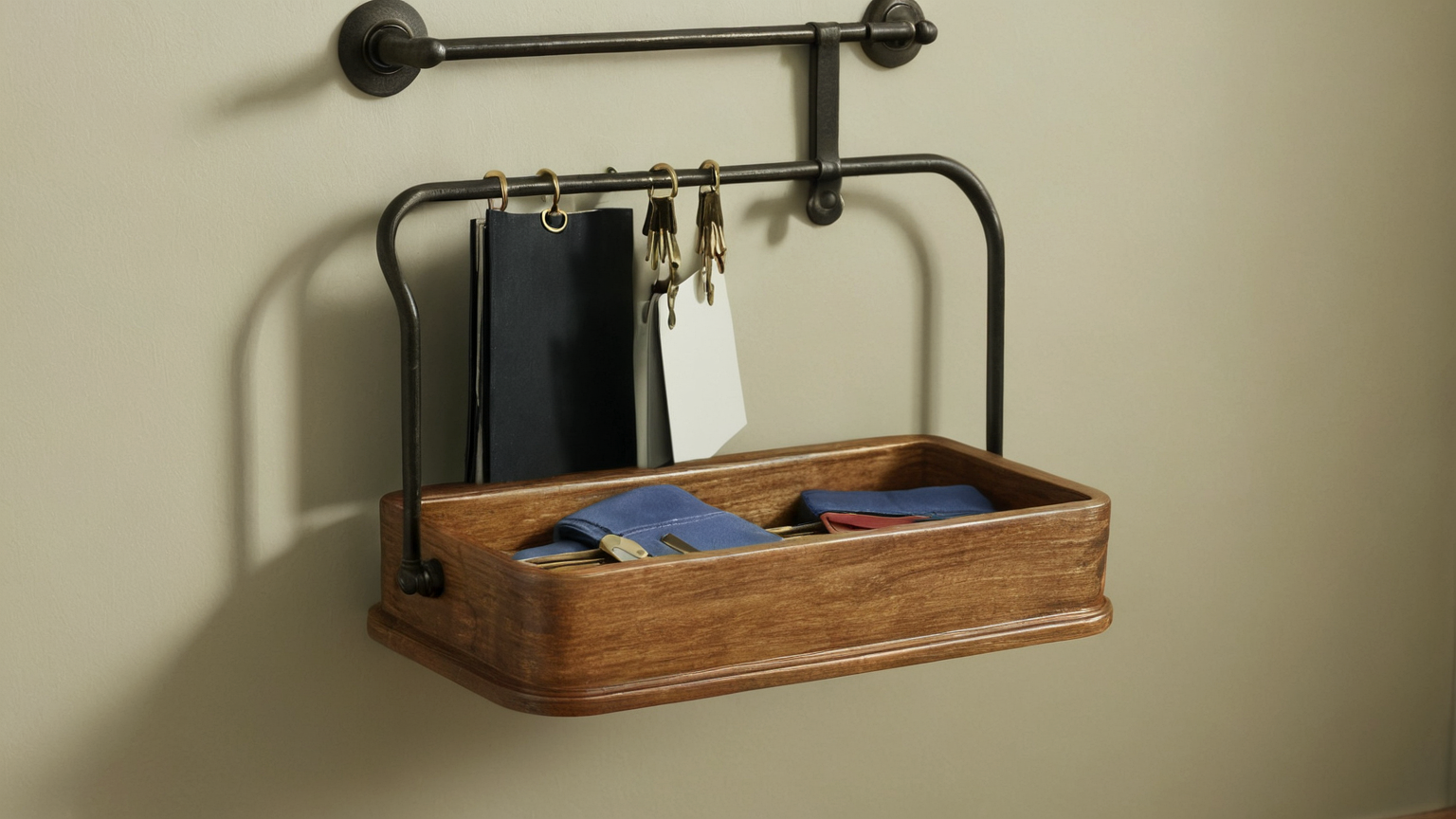
Lease-safe hooks, over-door racks, and freestanding rails can work, but weight and surface matter. Heavy bags on adhesive hooks often fail in heat or humidity. Avoid drilling into unknown surfaces, tile, fire-rated doors, or shared walls unless permission and installation conditions are clear. For a small landing strip, one bag hook and one jacket spot are usually enough; overflow should live in a closet, not beside the door.
Keep parcels from becoming clutter
Returns and outgoing packages need a deadline. Create a small parcel shelf or basket with a blank card that says the action in your own system: return, donate, repair, or ask. Do not leave address labels visible in a public hallway or near windows. If packages often pile up, the design problem may be decision delay, not storage capacity.
Heat, fire, and electrical caution
The entry is not the place for improvised charging nests, heaters, or overloaded power strips. Keep textiles, bags, and paper away from heat sources. If a shoe dryer or dehumidifying device is used, follow its instructions and keep cords out of the walking path. A beautiful entry that creates a trip or fire risk is not a successful interior solution.
Weekly reset
Once a week, remove shoes not used in the last seven days, wash or shake the mat, empty the key tray of receipts, move parcels to the next step, and check whether the door still opens freely. This ten-minute reset prevents the landing strip from turning into a storage unit.

AdSense-readiness note
InteriorNote benefits when advice is practical, renter-safe, and clear about limits. This guide uses official mold, tenant, fire, and fall-prevention references and avoids pretending that decorative products solve maintenance issues. The next readiness gap is a reusable renter-safety disclosure box for articles involving adhesives, drilling, heat, or moisture.
FAQ
How wide should the landing strip be?
Wide enough for a clear walking lane and full door swing. In very narrow entries, use vertical or over-door storage only for light items.
Is a closed shoe cabinet better?
Only for dry shoes. Damp shoes need airflow first.
What if the landlord bans hallway storage?
Keep the system fully inside the unit and avoid blocking shared exits or common areas.