Studios and open-concept apartments need defined zones to feel functional. Per ASID research and Apartment Therapy strategies, undivided open spaces feel less coherent and harder to use than spaces with clear zones for sleeping, working, dining, and relaxing. This article walks through what the design research actually shows about effective zoning, the tradeoffs of physical vs visual dividers, and which solutions work best in different layouts.
The TL;DR: bookshelves (especially IKEA Kallax) are the most-recommended physical divider — provide storage and partial visibility. Curtains on ceiling tracks create complete temporary walls. Visual zoning (rugs, lighting, color blocks) defines areas without physical barriers. Match the divider to whether you need privacy (physical), structure (mixed), or just visual cues (none).
For complementary content, see studio apartment layouts, storage small spaces, and multifunctional furniture compared.
Why zoning matters
Per ASID research on small-space functionality:
- Defined zones reduce cognitive load (clear “this area is for X”)
- Better rest in defined sleep zone (sleep hygiene principle)
- Better focus in defined work zone (psychological separation from leisure)
- Better entertaining when seating area is clearly defined
- Visual zoning makes spaces feel larger paradoxically (defined boundaries vs amorphous space)
The COVID-era rental data showed: open-concept apartments without good zoning solutions had higher tenant dissatisfaction during work-from-home era. Tenants increasingly value layouts with at least visual zone separation.
Physical dividers
Bookshelves (most-recommended)
The Wirecutter / Apartment Therapy / Real Simple consensus: IKEA Kallax is the most universally-recommended studio divider.
IKEA Kallax 4×2 (the studio classic)
- 57 inches tall × 30 inches wide × 16 inches deep
- 8 cube spaces (each ~13×13 inches)
- Storage on both sides (face/use both directions)
- $150-200
- Anti-tip bracket included (essential for safety)
- No wall attachment (rental-friendly)
IKEA Kallax 5×5
- 73 inches tall, near full-height
- 25 cubes
- More substantial visual barrier
- $200-300
IKEA Billy bookcase (taller, narrower)
- 79 inches tall × 31 inches wide
- More vertical, less wide footprint
- $80-150
Open-back wire shelving (Container Store, IKEA)
- Light feel
- Less privacy
- Easier to see through
Folding screens
Traditional Asian-influenced screens, modern interpretations:
Wirecutter top picks:
- Roundhill Furniture 4-panel (canvas) — $100-200
- Crate & Barrel screens — $400-800
- IKEA RYDET screens — $80-150
Considerations:
- Easy to fold and store
- Less storage utility than bookshelves
- Can be aesthetic statement
- Lower-impact than bookshelf
Curtains on tracks
Most rental-friendly full-divider option:
Setup:
- Ceiling-mounted curtain track (IKEA Vidga $20-80)
- Heavy curtain panels (IKEA Sanela velvet, Restoration Hardware blackout) $50-200
- Hooks and accessories ~$10-30
Cost: $80-310 total
Effect:
- Closes completely for full visual separation
- Opens completely to recover open-plan feel
- Heavy fabric blocks meaningful light (sleep area)
- Soft sound absorption (5-15 dB reduction)
Best for: Studios where you want full separation sometimes, fully open other times.
Modular shelf-walls
For long-term tenants/owners:
IKEA Pax wardrobes used as room divider
- 79 inches tall, fully or partially block view
- Storage facing one or both sides
- Customizable interiors
- $200-1,000+ depending on configuration
Resource Furniture transforming walls
- Full transformer pieces that hide bed, integrate office, etc.
- $4,000-15,000 — premium
- For owners of small homes
- Lifetime durability
Half-walls (for owners only)
- Custom-built half-wall provides definite boundary while preserving light flow
- Owner-only (renters can’t modify walls)
- $1,000-3,000 typical professional install
- Permanent commitment

Visual zoning (no physical divider)
For situations where physical dividers feel oppressive or unnecessary:
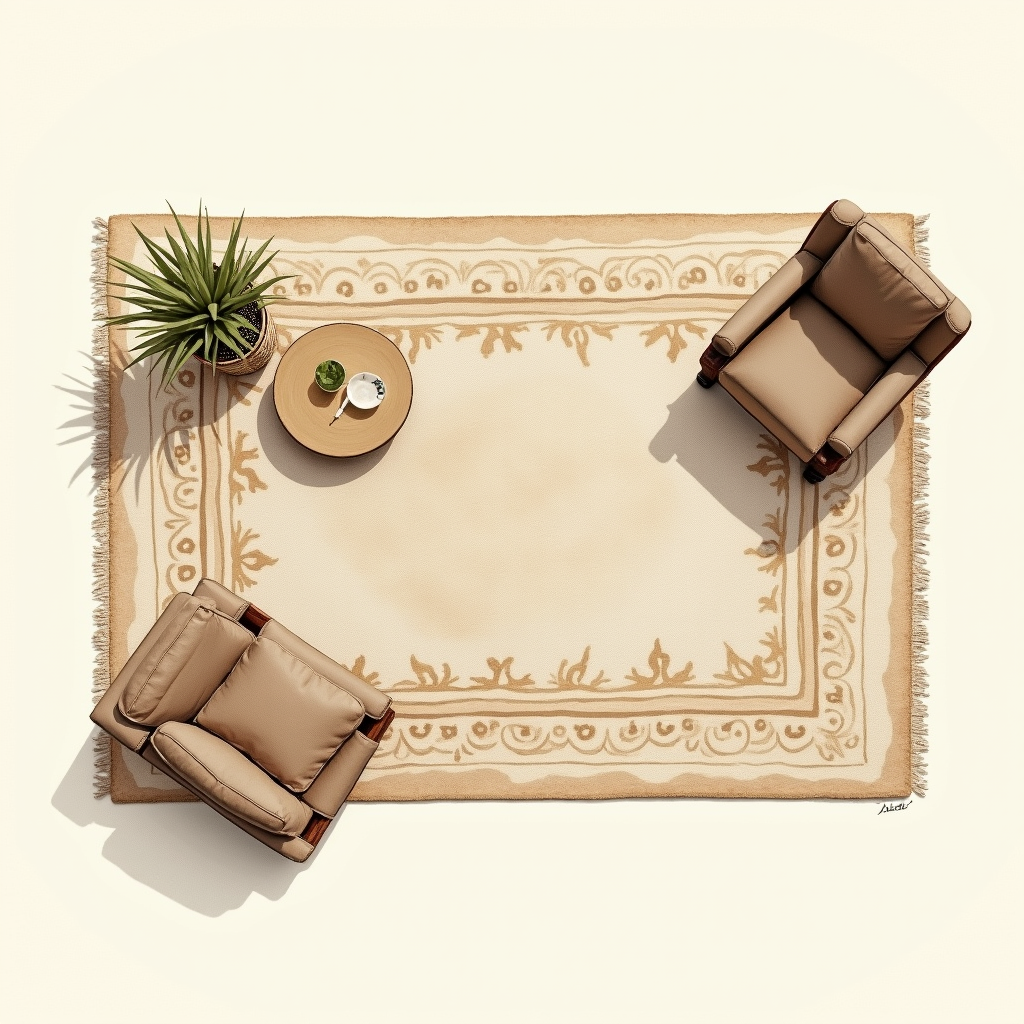
Area rugs
A defined rug clearly says “this is the X area”:
- Living/conversation area (rug under coffee table + sofa)
- Dining area (rug under dining table)
- Bedroom area (rug under bed)
- Workspace (smaller rug under desk)
Per ASID research, well-defined rugs anchor visual zones effectively in studios.
Rug size guidance:
- Living area: rug should be at least under all sofa front legs
- Dining: extends 24+ inches beyond table on all sides (so chairs stay on rug)
- Bedroom: extends 18-24 inches around bed (or full room rug)
Lighting separation
Different lighting in different zones creates psychological zone definition:
- Bright cool task lighting in workspace
- Warm ambient lighting in relaxation area
- Bright direct lighting in dining
- Soft warm in bedroom
The eye reads “different lighting → different zone” automatically.
See small space lighting design for full lighting guidance.
Color blocks
Wall color or large-scale wall art:
- Different accent wall in each zone (renters: removable wallpaper)
- Large rug colors that contrast across zones
- Bedding/throw colors that define sleep area
- Workspace color theme (blue/green for productivity)
Furniture placement
The most underused zoning technique:
- Sofa back facing dining area (creates separation)
- Desk perpendicular to wall, not against it (creates zone)
- Console or sideboard separating areas
- Bed angle creating natural zone with headboard wall
Plants
Tall plants (fiddle leaf fig, palm, monstera) create soft visual barriers:
- 6-foot plants block sightlines without blocking light
- Add organic warmth
- Multiple smaller plants cluster to suggest boundary
For renters, plants are completely non-permanent, easy to move, and aesthetically valuable.
Specific layouts
True studio (350-450 sq ft)
Layout 1: Bed at end, living in front
Sleep zone (back, near windows for cross-ventilation) → bookshelf or curtain divider → living area → kitchen.
Layout 2: Bed in alcove
If apartment has small alcove or recessed area: bed there, curtain across alcove opening → living area takes main space.
Layout 3: Murphy bed
Bed disappears entirely day → desk/seating area becomes main space → bed deploys at night.
Layout 4: Daybed
Day-time sofa, night-time bed (sleep on it). No separation needed; one piece, dual function.
Open-concept 1BR/2BR
Living/dining separation:
- Sofa back to dining area
- Different rugs for each zone
- Pendant light over dining table marks zone
- Optional: half-bookshelf or console behind sofa
Living/kitchen separation:
- Counter-height bar (if open kitchen)
- Different lighting (kitchen brighter, living warmer)
- Rug in living area only
- Optional: half-wall (owners only)
Loft / studio-with-loft
- Sleep zone in loft
- Living below
- Visual separation from height differential
- Optional: curtain on loft edge for additional privacy
Home office in studio
Approach 1: Behind divider
- Bookshelf or curtain divides workspace from rest of studio
- Important for video calls (control background)
- Important for end-of-workday psychological transition
Approach 2: Closet office
- Convert closet to office
- Doors close end of day
- Provides privacy + clear “off-duty” boundary
Approach 3: Convertible
- Desk in corner that folds away (Murphy desk style)
- Or rolling cart workstation
See ergonomic chair data for chair selection.
Sound considerations
What dividers do for sound
Per acoustic research, dividers reduce sound by:
- Hard-surface bookshelves: 5-10 dB
- Soft-fabric screens: 10-15 dB
- Heavy curtains: 10-15 dB
- Half-wall (sheetrock): 15-25 dB
Normal speech: ~60 dB Whispered: ~30 dB Reduction of 10 dB makes sound subjectively half as loud.
What dividers don’t do
- Block sound completely
- Help with structural / through-wall noise
- Substitute for actual walls
Acoustic enhancements (when sound matters)
- Heavy area rugs absorb floor reverberation
- Fabric wall hangings absorb wall reflection
- Acoustic panels (Auralex, Owens Corning 703) for serious treatment
- Bookshelves filled with books (heavy paper absorbs sound)
For working from home with video calls in studio, combining heavy curtains + book-filled bookshelf + rugs achieves meaningful sound reduction without hard remodeling.
Light flow considerations
The trade-off in zoning: privacy vs. light flow.
High light flow / low privacy
- Open concept (no divider)
- Visual zoning only (rugs, lighting, color)
- Open-back wire shelving
Medium light flow / medium privacy
- Bookshelves (Kallax) — light comes through cube spaces
- Folding screens — partial blocking
- Half-height dividers
Low light flow / high privacy
- Solid bookshelves (Billy with full backs)
- Heavy curtains (closed)
- Solid folding screens
- Wardrobes used as dividers
For dark apartments (basement, north-facing), preserve light flow over privacy. For bright apartments with too much light in sleep area, privacy options work well.

Top picks by need
Most-recommended (any small space)
IKEA Kallax 4×2 ($150-200)
- Storage both sides
- 57” tall provides definite separation without full walling
- Easy to assemble, easy to move
- Anti-tip bracket essential
- Won’t damage rental walls
Premium aesthetic
West Elm or CB2 bookshelves used as dividers ($400-1,000)
- More design-forward than IKEA
- Often ship in two pieces back-to-back forming nice divider
- Better materials, longer lifespan
Maximum privacy on budget
Heavy curtain on ceiling track ($80-200 total)
- Closes completely
- Easy to install (track requires drilling)
- Removable for moves
- Best privacy per dollar
Maximum flexibility
Folding screen ($80-300)
- Move any time
- Fold flat when not needed
- No assembly required
- Good for hosting (set up before, remove after)
Owner-grade transformative
Resource Furniture Clei wall systems ($5,000-15,000+)
- Complete transformation
- Bed, desk, shelving in one
- Lifetime durability
- For 250-400 sq ft true studios where space is critical
Common mistakes
Tall narrow divider that tips
Bookshelves require anti-tip wall straps. IKEA includes them; many users skip installation. Don’t.
Dividing tiny spaces unnecessarily
In 250-300 sq ft studio, dividing into 2 even smaller zones can make both feel cramped. Sometimes open is better.
Dark dividers in dark spaces
Heavy black bookshelf in already-dark apartment makes both sides darker. Light-colored or open-back dividers preserve light better.
Walking patterns blocked
Dividers create “rooms” with traffic patterns. If you have to constantly walk around bookshelf, layout failed. Plan traffic patterns first.
Visual chaos
Too many divider types layered (bookshelf + screen + curtain + rugs + plants) creates visual chaos. Pick 1-2 zoning techniques per area.
Bottom line
For small-space zoning:
- Identify what zones you actually need (sleep, work, dining, relaxation, hosting)
- Match divider to privacy/light tradeoff — bookshelves balance both, curtains for max privacy, visual zoning for max light
- IKEA Kallax 4×2 is the universal first choice for studios
- Curtains on ceiling track for full-but-removable separation
- Visual zoning (rug + lighting + furniture orientation) when physical divider feels too much
- Anti-tip safety for any tall standalone divider
Total cost for comprehensive small-space zoning: $150-500 typical. Effect: studio or open concept apartment feels properly functional with defined daily-use zones.
For complementary content, see studio apartment layouts, storage small spaces, and multifunctional furniture compared.
Room dividers that create zones without permanent construction
For studio and loft spaces, three categories of dividers solve 90% of zoning needs without losing rental deposits. Hardware-free freestanding panels, bookcase dividers, and curtain systems each have a specific use case.
VASAGLE 6-Tier Industrial Bookshelf (Double-Sided Divider)
Price · $160-220 — bookshelf that divides while storing
+ Pros
- · Open shelving doubles as room divider with both-sides accessibility
- · Industrial steel + wood — handles 70 lbs per shelf
- · Won't damage walls — no installation required
− Cons
- · 65-inch height blocks line of sight, not light
- · Particle board top — keep away from windows that admit moisture
Paid affiliate link. Price, availability, and ratings can change; verify details on the retailer page before buying.
OASIS Folding Privacy Screen (4-Panel)
Price · $110-160 — instant privacy, easily portable
+ Pros
- · 4 panels x 16 inch each — flexible angles to wrap around bed or workspace
- · Wood frame + opaque fabric — blocks visual but lets sound through
- · Folds flat against wall for storage
− Cons
- · Less stable than bookshelf — can tip in high-traffic areas
- · Fabric inserts can stain — spot clean only
Paid affiliate link. Price, availability, and ratings can change; verify details on the retailer page before buying.
Tension Curtain Rod + Blackout Curtain Set
Price · $30-60 — cheapest reversible divider
+ Pros
- · Tension rod requires no drilling — full deposit-safe
- · Blackout fabric blocks both light and visual for sleep zoning
- · Easy to take down for guests or quick layout changes
− Cons
- · Tension rods up to ~120 inches max — measure ceiling width first
- · Sound bleeds through fabric (use rugs / soft surfaces nearby)
Paid affiliate link. Price, availability, and ratings can change; verify details on the retailer page before buying.
The bookshelf divider is the most space-efficient because it doubles storage and zoning. Use the privacy screen for a flexible bedroom-corner zone, and reserve the tension curtain for renters who need a fully reversible solution.