Apartment Linen Closet Shelf Spacer and Airflow Plan for Humid Weeks
A linen closet airflow plan is a room-design task, not a storage-shopping task. The useful question is whether towels and bedding can dry, rest, and come out without musty corners, blocked doors, or piles falling into the hallway. This guide is current as of 2026-07-01 and is written for renters who need reversible, low-risk changes.
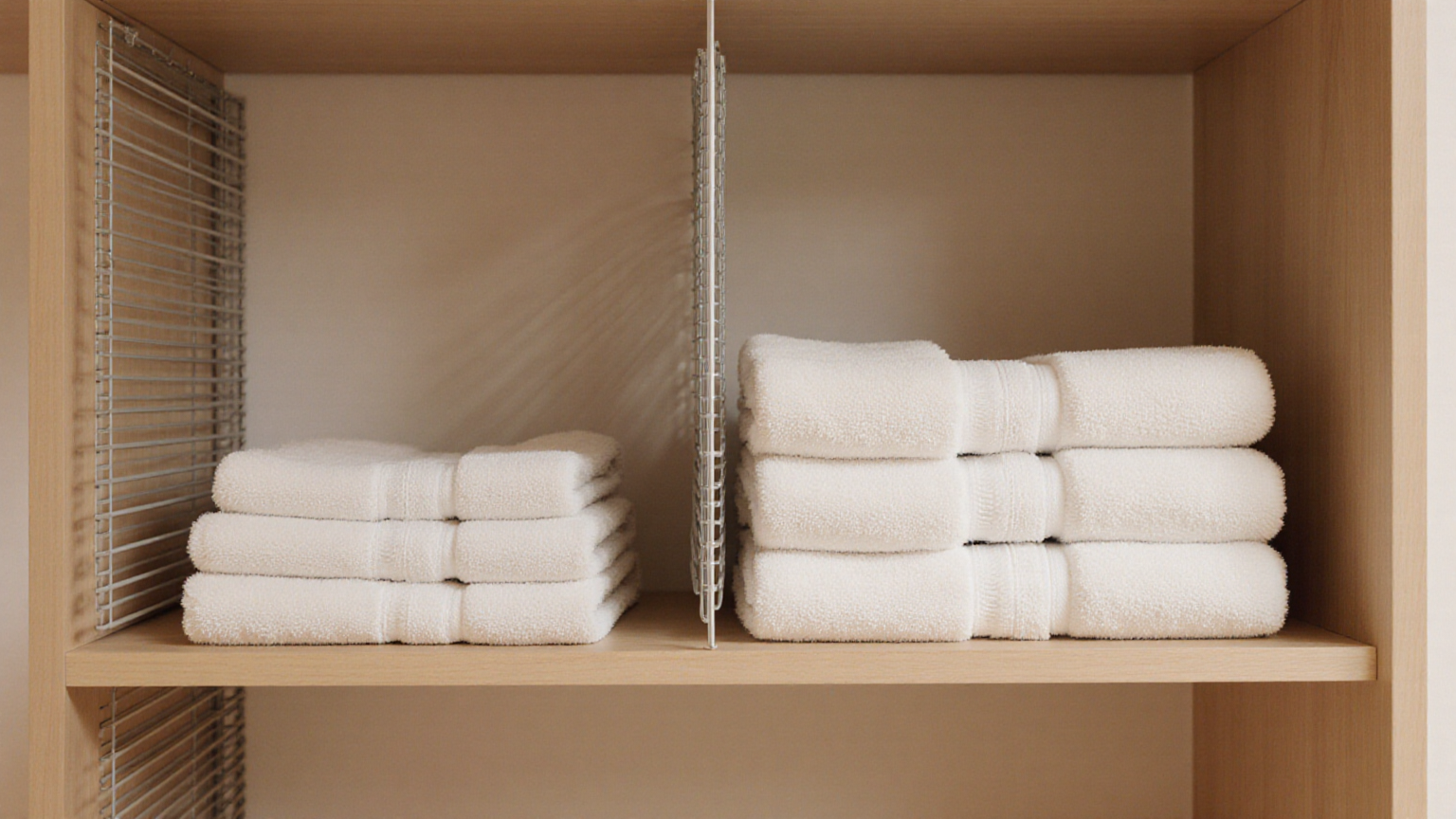
Linen closet airflow decision table
| Closet cue | Better adjustment | Avoid |
|---|---|---|
| Towels feel cool or musty after a day on the shelf | Reduce stack height and create a finger-width air gap behind the pile | Adding scented liners that mask moisture instead of improving drying |
| The door rubs against bulky bedding | Move seasonal items higher or into a breathable bin before adding shelf spacers | Forcing the door closed around compressed linens |
| A renter cannot drill or mount hardware | Use removable shelf dividers, freestanding bins, and a written rotation rule | Wall brackets or adhesive hooks that may violate the lease or fail in humidity |
| The same shelf becomes messy every week | Label one shelf by use case and remove one backup set | Buying another organizer while keeping too many duplicate linens |
Measure the shelf, not the product
Start by measuring the usable shelf height, depth, and door swing. A spacer that looks helpful in a photo can crowd the shelf if it blocks your hand from removing a towel. Leave a small air gap above stacks and avoid stuffing linens against the back wall when the closet already feels humid.
Sort by drying risk
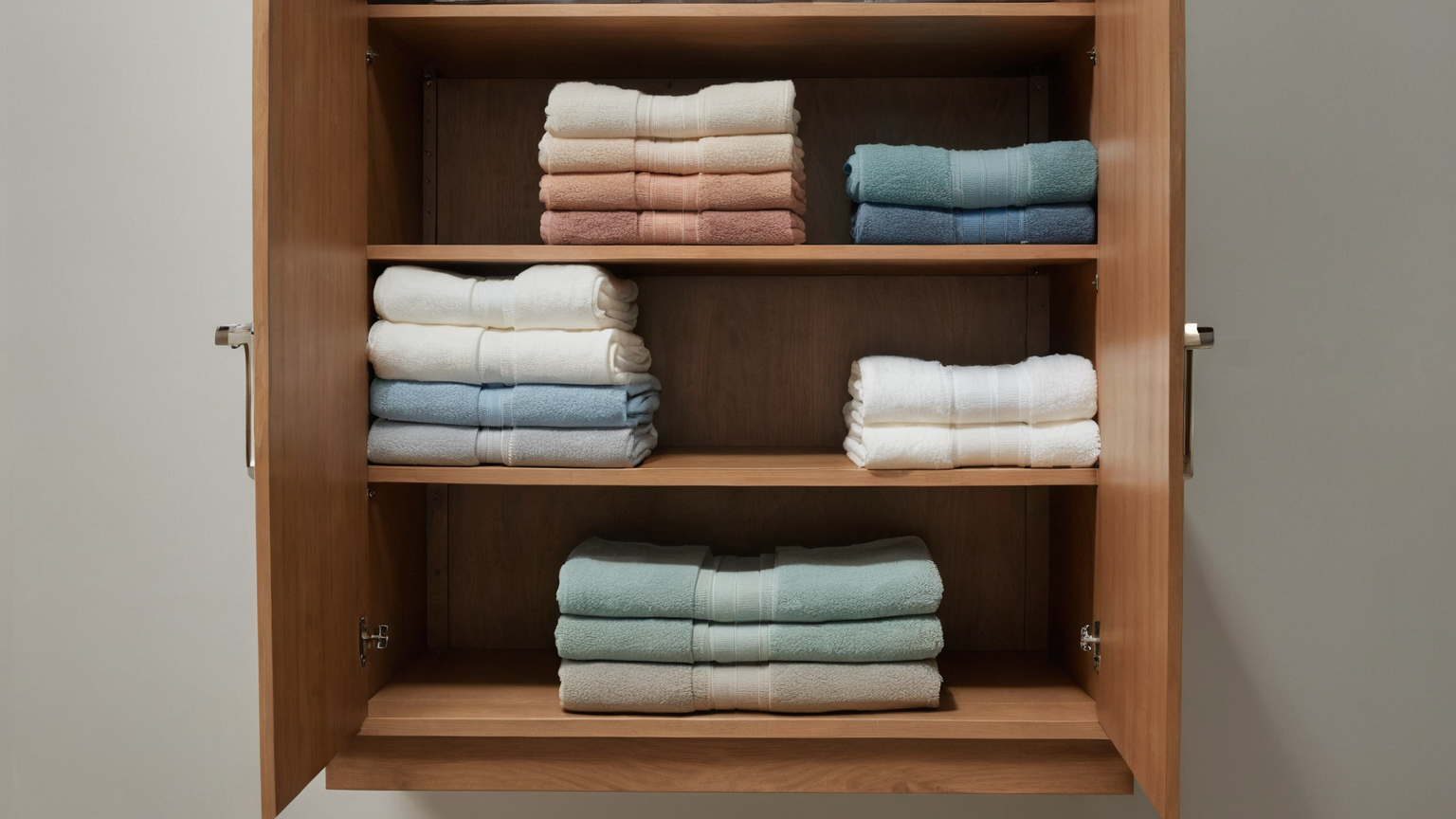
Put frequently used towels where they can come out first and return only when fully dry. Reserve higher shelves for seasonal bedding that is completely clean and dry. If a towel still feels damp, it belongs on a drying bar or chair back temporarily, not sealed into a basket with other fabric.
Use dividers as air lanes
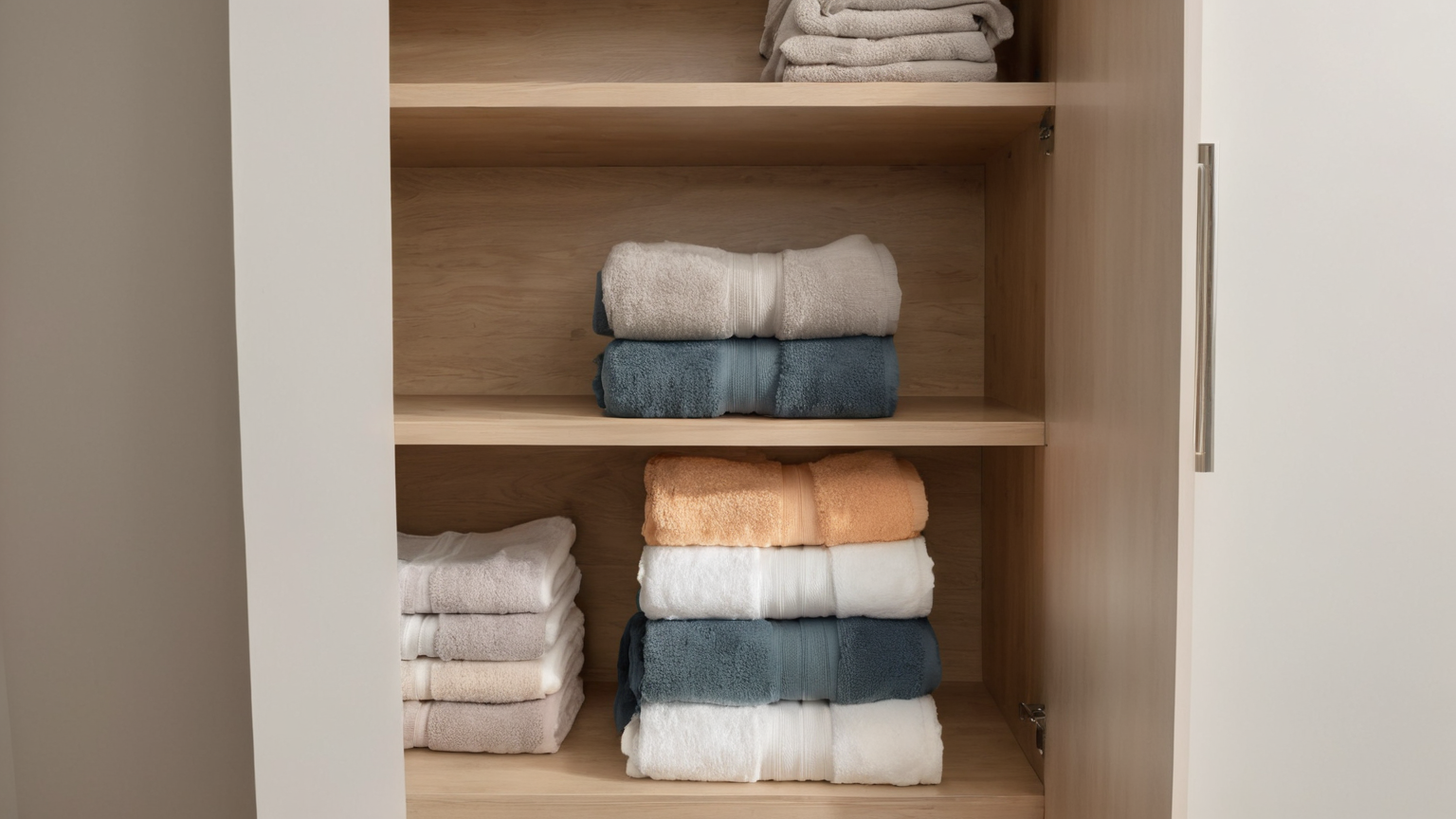
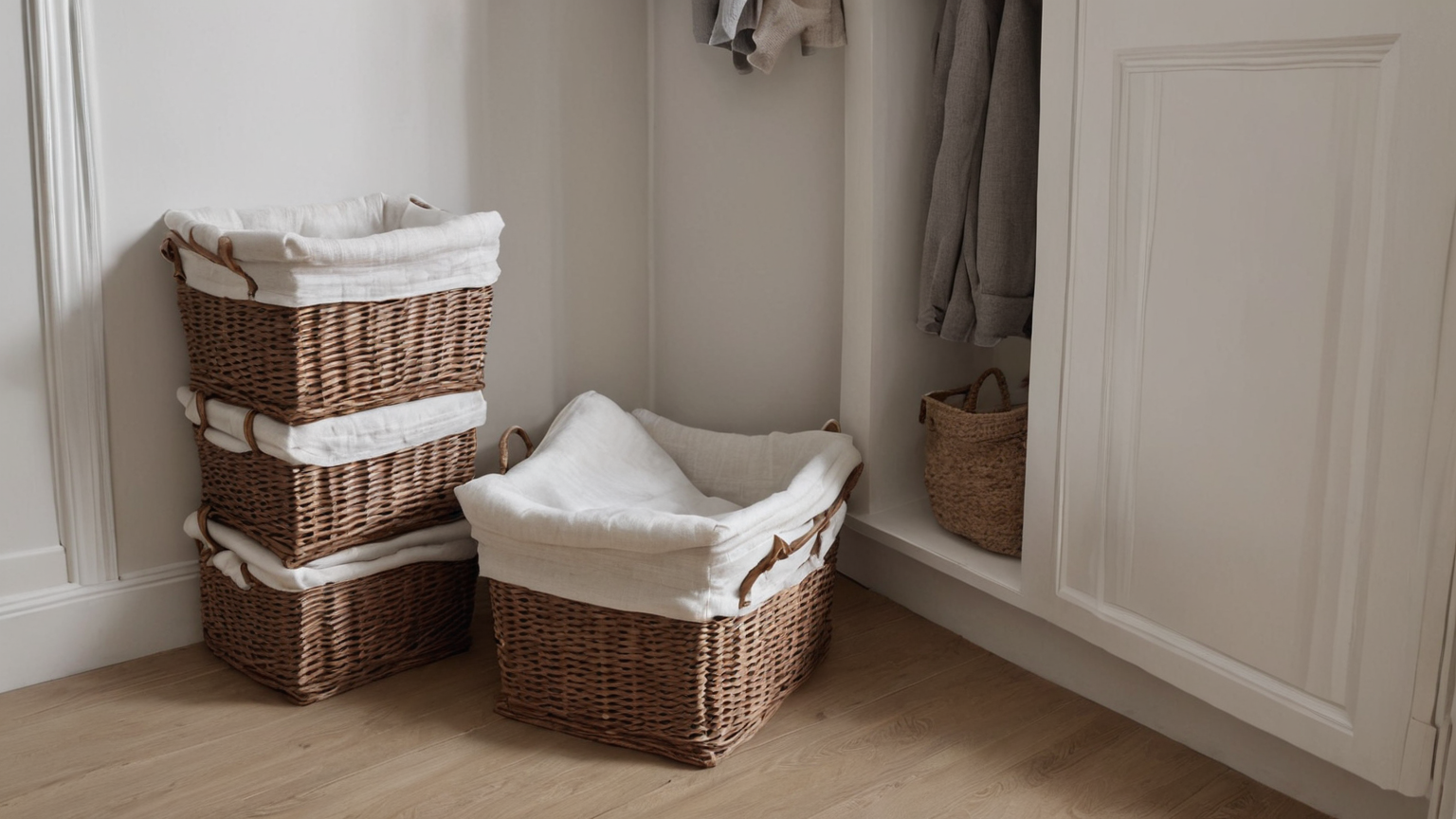
A divider can make a narrow vertical air lane between stacks. It should be smooth, stable, and easy to remove. Avoid adhesive hardware if the lease or wall finish is uncertain. A breathable basket can help only when it does not become a deep bin where forgotten damp towels disappear.
Keep the hallway safe
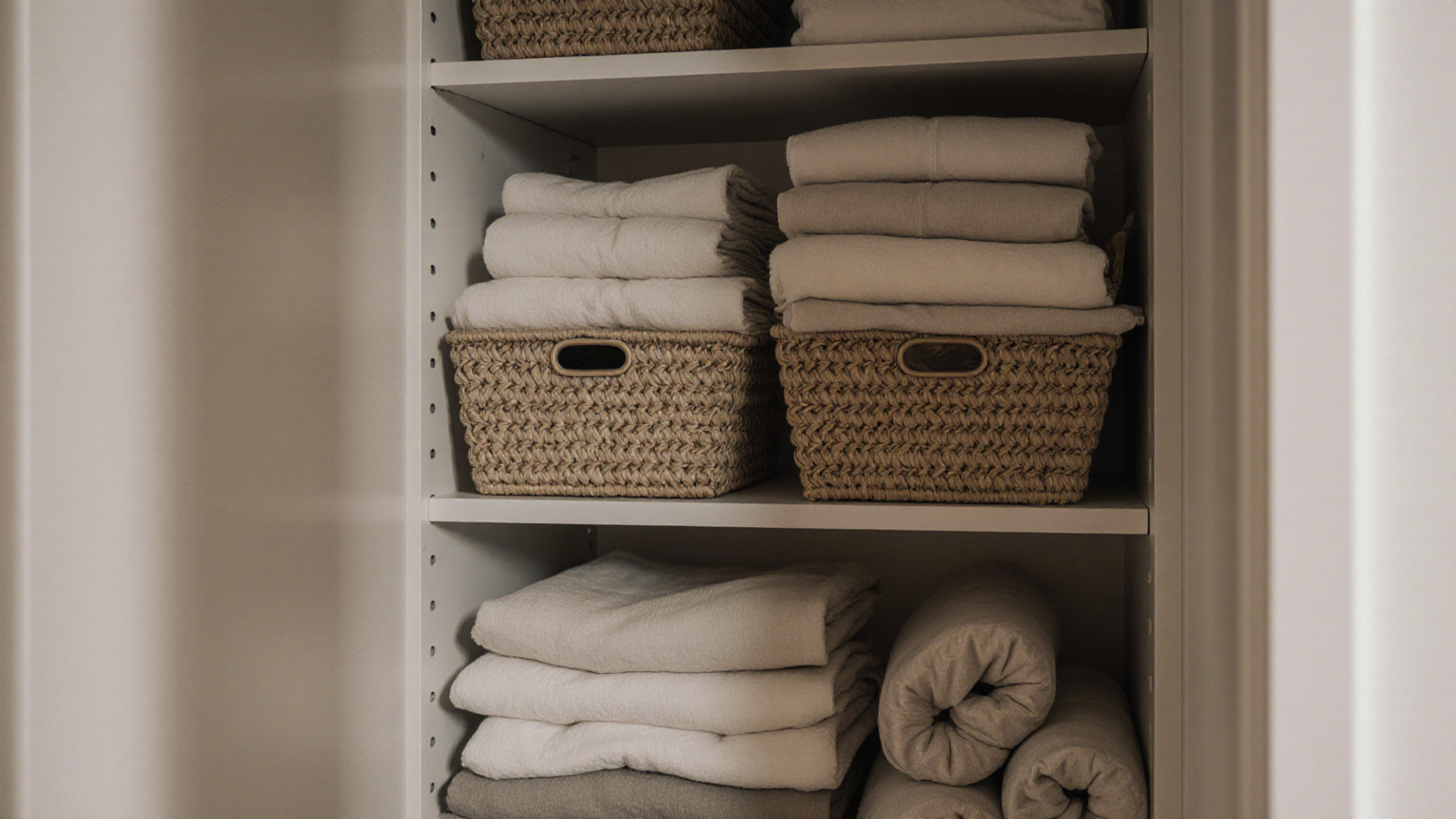
The best closet system fails if it causes baskets to sit in a walkway. Keep the floor clear enough for nighttime movement and for anyone carrying laundry. If the door cannot open fully, reduce the number of stored categories before buying a taller organizer.

AdSense and trust note
This guide avoids affiliate pressure and keeps the advice reversible. It connects interior choices to indoor air, moisture, fire-exit, and fall-prevention boundaries rather than presenting storage as decoration only.
Practical checklist
- Confirm the routine can be explained in one sentence.
- Remove one obstacle before adding any new tool.
- Keep private, safety, or lease-sensitive details out of visible notes.
- Recheck the setup after weather, travel, exams, or a room change.
- If a hazard involves electricity, water, medical risk, legal obligations, or school policy, use qualified or official help instead of guessing.
FAQ
Is this a buying guide?
No. It is a decision routine. Buy only after the baseline check shows a specific gap.
Why include official sources?
Because home safety, indoor air, privacy, financial-aid, and accessibility topics can become harmful when advice is stale or unsupported.
How often should I revisit it?
Use a monthly rhythm for home systems and a deadline-based rhythm for school systems. The better test is whether the next person can understand the routine without you present.
Final review before you close the loop
A strong helpful-content article should leave the reader with a safer next action, not a vague impression. Before closing this routine, check that the key object is visible, the next date is known, the responsible person is named, and the source of truth is official or local to the household, lease, school, or policy. If any part feels like decoration rather than a decision aid, remove it or rewrite it as a concrete step. This is also the AdSense-readiness standard for this site: practical, source-aware, non-thin, and not built around affiliate density.